
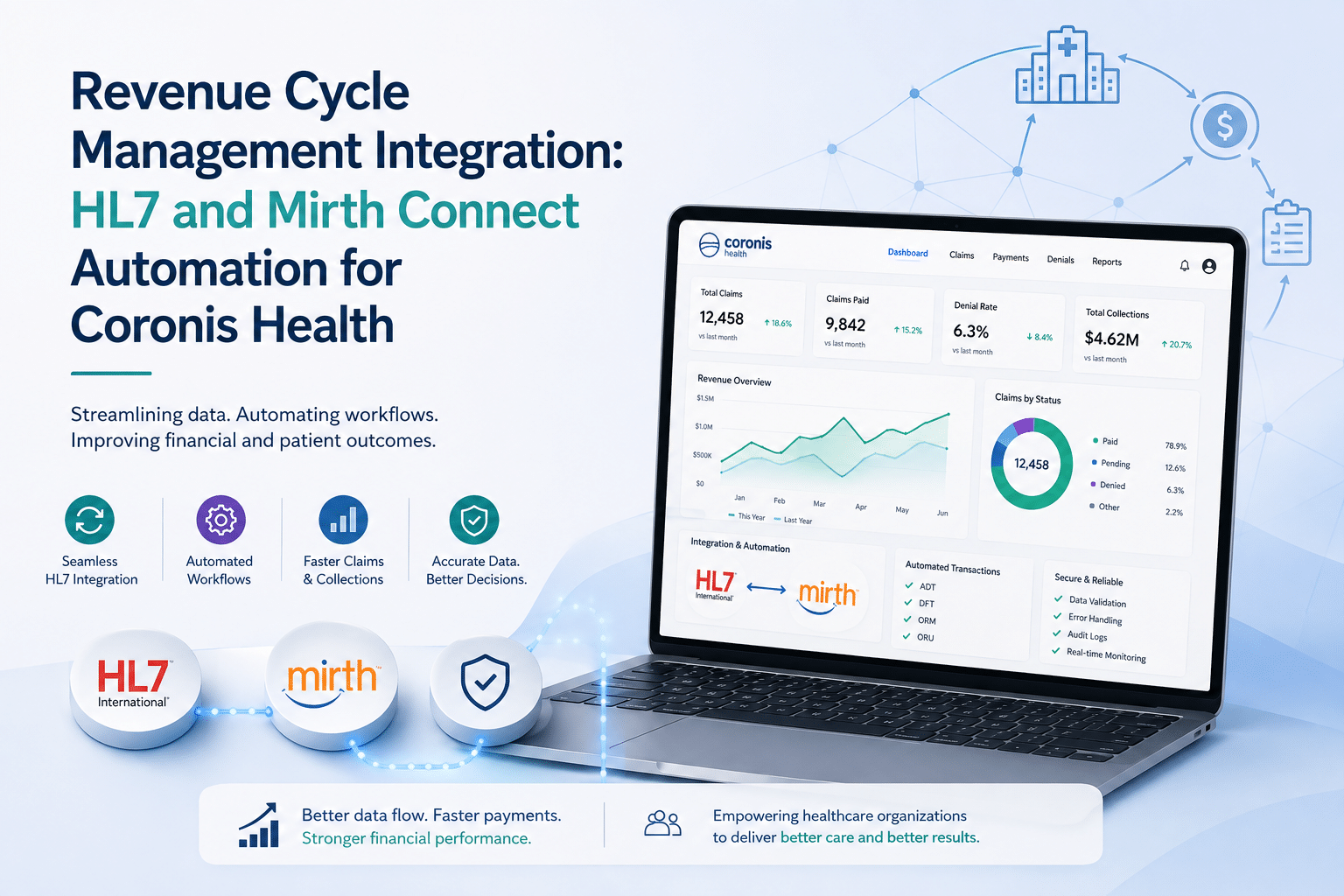
Taction Software built a web-based data and process management platform for Coronis Health, a global revenue cycle management company serving healthcare practices and facilities. The system automates data exchange across multiple billing platforms using HL7 secured channels customized in Mirth Connect, with server-side HL7 field validation, per-transaction crosswalks, audit management, and service group management. It runs on WordPress, AngularJS, and Mirth Connect. Quick Results Outcome Detail Data exchange Automated across multiple billing platforms, replacing manual transfer Integration engine HL7 secured channels customized in Mirth Connect Data quality control Server-side HL7 validation applied to patient data fields before processing Transaction mapping Crosswalks implemented per transaction type across connected systems Governance Audit management and service group management built into the platform Client scope Global RCM operation serving practices and facilities, including CRT Medical Systems in southeastern Michigan Book a 30-minute integration assessment Client Overview Coronis Health is a global revenue cycle management company offering specialized solutions to healthcare practices and facilities. It combines industry-leading technology with high-touch relationship building, allowing healthcare practitioners to focus on patient care, maintain financial independence, and cultivate financial success. Coronis Health operates through a group of specialist billing companies, including CRT Medical Systems, a southeastern Michigan medical billing firm with more than 30 years in clinical practice billing. Taction Software was engaged to build the web application and integration layer that moves patient and transaction data between Coronis Health’s operations and the billing platforms its client practices run on. The Challenge Revenue cycle management is an integration problem before it is a billing problem. An RCM company does not control the systems its clients use. It inherits them. Coronis Health faced four constraints at once. Many billing platforms, one operation. Client practices run different billing and practice management systems. Every one of them formats patient and transaction data differently. Without a common integration layer, each new client relationship means bespoke data handling and a new source of manual work. HL7 variability. HL7 is intentionally flexible, which means two systems sending the same message type will differ in field mappings, segment usage, and optional fields. Data arriving unvalidated propagates errors straight into claims. Manual data exchange. Moving data between systems by hand does not scale with client growth, and every manual touch is a place where a transaction gets mishandled. Auditability. RCM operations answer to payers, to client practices, and to regulators. Every transaction needs a traceable record of what arrived, what it was transformed into, and where it went. Our Solution A single web application sitting between Coronis Health’s operations and every billing platform it connects to, with Mirth Connect handling the message routing and transformation underneath. Rather than build a point-to-point connection for every client system, we built one integration layer with configurable channels and crosswalks. New billing platforms are added as configuration rather than as new code. This is the same architecture pattern behind our healthcare integration and interoperability services. Implementation and Approach Interface and data flow mapping. We documented every source system, message type, and field-level difference across the billing platforms in scope before writing channel logic. Mirth Connect channel development. HL7 secured channels were built and customized in Mirth Connect to receive, filter, transform, and route messages between systems. Channel design carried the transformation logic so system-specific quirks stayed out of the application layer. Our broader Mirth Connect integration practice was applied directly here. Server-side HL7 validation. Validation rules were implemented on the HL7 server for patient data fields, so malformed or incomplete messages are caught at the boundary rather than surfacing later as a denied claim. Per-transaction crosswalks. Each transaction type received its own crosswalk, mapping codes and field values between source and destination systems. This is the layer that lets one platform speak to many billing systems without loss of meaning. Audit management. Transaction-level logging built in from the start, giving traceability across the full data path for compliance review and client reporting. Service group management. Administrative structure for organizing client practices and service lines, so operations teams manage relationships and permissions inside the platform. Automation of the exchange process. With channels, validation, and crosswalks in place, routine data movement between systems runs without manual handling. Technology Stack Layer Technology Engineering rationale Frontend AngularJS Structured two-way data binding suits form-heavy administrative and validation interfaces Web platform WordPress Content and public-facing layer maintainable by the client’s own team without developer involvement Integration engine Mirth Connect Industry-standard healthcare interface engine for HL7 message routing, filtering, and transformation Mirth Connect was not a preference, it was the correct tool. It is the engine most widely deployed for HL7 routing in US healthcare, which means the integration layer uses patterns other vendors and client IT teams already recognize. Full detail on our approach sits in our HL7 and Mirth Connect integration practice. Key Features Web application for data and process management. A single operational interface for managing data flows and transaction processes across connected systems. Automation of the data exchange process. Routine transfer between Coronis Health and client billing platforms runs automatically rather than by hand. Integration with multiple billing platforms. One integration layer supporting many destination systems instead of point-to-point connections per client. HL7 secured channel customization with Mirth Connect. Purpose-built channels handling routing, filtering, and transformation for each connected system. HL7 server validations for patient data fields. Field-level validation applied at the boundary, catching bad data before it reaches billing. Crosswalk implementation for each transaction. Per-transaction code and field mapping between source and destination systems. Audit management. Traceable transaction records across the full data path. Service group management. Administrative organization of client practices and service lines within the platform. Results and Business Impact Manual data handling replaced by automated exchange. The routine work of moving patient and transaction data between systems no longer consumes operations staff time. Data errors caught at the boundary. Server-side HL7 validation stops malformed patient data before it becomes a denied claim, which is the cheapest possible point to catch it. New billing platforms onboard as configuration. Crosswalks
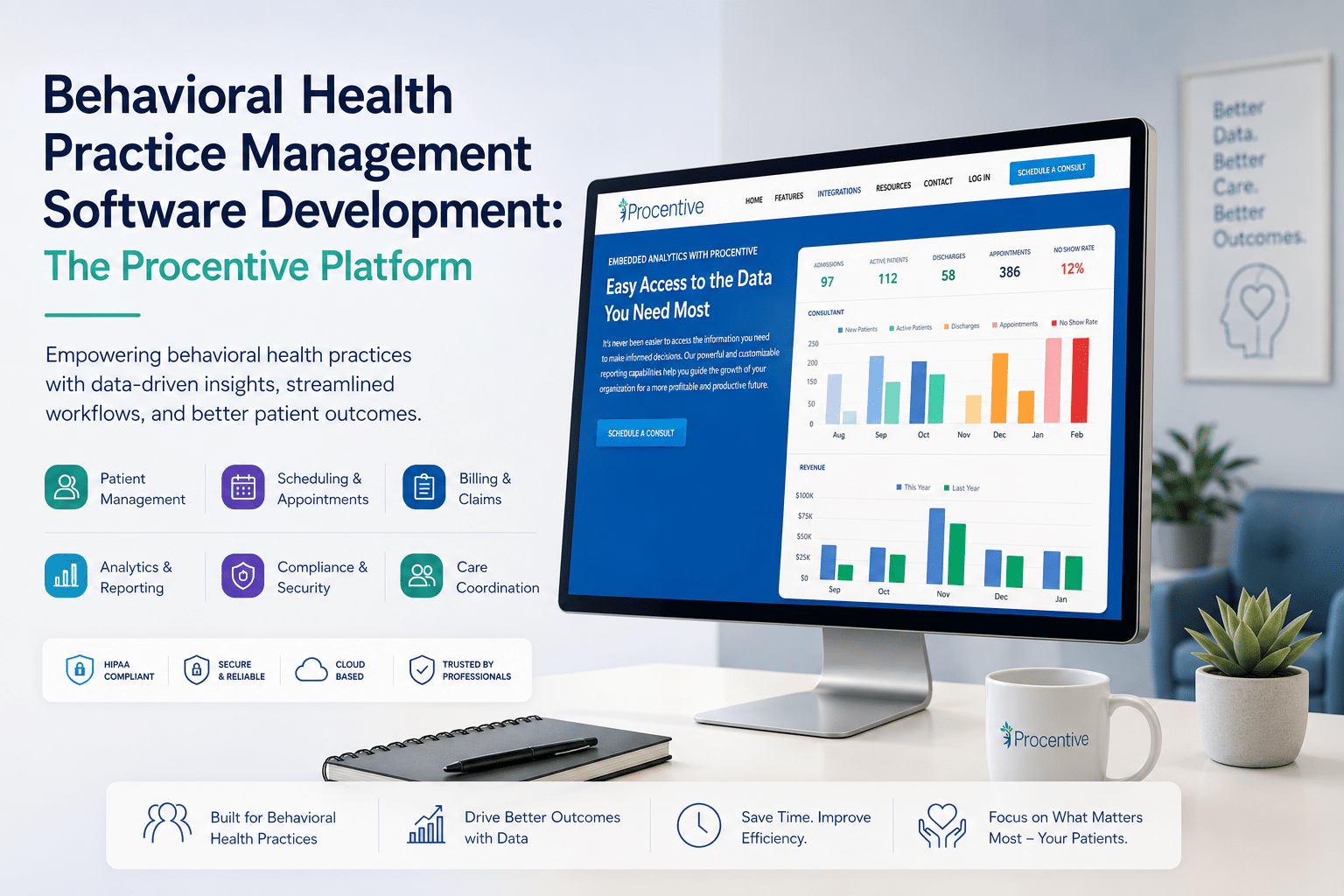
Taction Software built Procentive, a HIPAA-compliant SaaS practice management platform for mental, behavioral, and rehabilitative therapy providers. The platform unifies patient scheduling, a client portal, clinical EHR, a configurable workflow engine, billing and transaction management, front office operations, and embedded self-service analytics in a single system built on Node.js, MongoDB, and Vue.js. Procentive now sits within the Therapy Brands portfolio. Quick Results Outcome Detail Modules unified in one platform Seven: authentication, client portal, clinical EHR, workflow engine, billing, front office, analytics Compliance posture HIPAA-aligned SaaS architecture with role-based access control, encryption, and audit logging Reporting model Self-service dashboards configurable by practice staff without developer involvement Delivery model Multi-tenant SaaS, new practices onboard without separate deployments Platform outcome Acquired into the Therapy Brands portfolio Book a 30-minute build assessment Client Overview Procentive is a healthcare technology company serving mental, behavioral, and rehabilitative therapy providers across the United States. Its purpose-built practice management, data, and billing solutions support both clinical delivery and financial operations for therapy organizations. Taction Software was engaged to build and extend the platform’s core modules, with emphasis on HIPAA-compliant SaaS architecture, embedded reporting, and unified workflows spanning front office, clinical, and revenue cycle functions. The platform has since moved under the Therapy Brands portfolio. The Challenge Behavioral health is one of the hardest verticals in healthcare software. Documentation requirements are heavier than general practice, confidentiality rules are stricter, and reimbursement depends on clinical notes that most systems keep in a separate place from billing. Procentive needed to solve four problems simultaneously. Fragmented systems. Therapy providers typically run scheduling, clinical documentation, prescriptions, and billing in separate tools. Every handoff between them is a failure point where a claim gets denied or a follow-up appointment never gets booked. Compliance as architecture, not afterthought. A behavioral health platform handles some of the most sensitive protected health information in healthcare. HIPAA safeguards had to be structural rather than a layer added before launch. Reporting bottlenecks. Practice leadership needed operational and financial visibility. In most systems that means exporting to spreadsheets and making decisions on last month’s data. Multi-tenant scale. As a commercial SaaS product serving many independent practices, the platform needed tenant isolation without a separate deployment for every customer. Our Solution A single platform where the clinical record, the appointment, and the charge are the same object. When a clinician signs documentation, the billing module already has what it needs. When a patient reschedules in the portal, the front office calendar and the provider’s day both update. No re-entry, no nightly sync, no reconciliation between systems. This is the architectural pattern behind our behavioral health and custom healthcare software development work. Implementation and Approach Discovery and workflow mapping. We mapped how therapy practices actually move a patient from intake through documentation to claim, including the exception paths that break generic EHR software. Compliance architecture first. Role-based access control, encryption in transit and at rest, and audit logging were specified before feature work began, so protected health information handling became a design constraint rather than a retrofit. Our standard for HIPAA-compliant software development applies from the first sprint. Multi-tenant data model. Tenant isolation designed into the schema so new practices onboard without infrastructure work. Module-by-module delivery. Authentication and clinical core first, then front office and client portal, then billing, then the workflow engine, then analytics on top of a now-unified data layer. Analytics deliberately last. Reporting built on a fragmented data model produces reports nobody trusts. Sequencing analytics after consolidation was a decision, not a scheduling accident. Configurable reporting layer. Rather than ship fixed dashboards and absorb change requests indefinitely, we built a reporting engine practice staff configure themselves. Technology Stack Procentive runs on one configuration of our broader healthcare technology stack. Layer Technology Engineering rationale Frontend Vue.js Reactive rendering suits dashboard-heavy reporting views with frequent state changes Backend Node.js Handles concurrent API traffic across portal, clinical, and billing modules efficiently Database MongoDB Document model accommodates varied clinical note structures and user-defined report definitions without rigid schema migration Delivery Multi-tenant SaaS New practices onboard without separate deployments If your organization already runs a stack, we build in it. This one was selected for the reporting load and document variability specific to behavioral health. Key Features Secure authentication and access control. Login and signup flows with role-based permissions separating clinician, administrative, and patient access paths. HIPAA-compliant SaaS foundation. Multi-tenant architecture with encryption in transit and at rest, audit logging, and access controls aligned to HIPAA administrative and technical safeguards. Client portal. Patients book and manage appointments, view prescriptions, and communicate with the practice directly. The same interaction patterns carry into our wider healthcare app development work for therapy providers. Clinical EHR. Patient reports, clinical notes, and document management, with every record tied to the encounter and to downstream billing. Workflow engine. Configurable task routing with ownership, due dates, and supervisor visibility on anything overdue. Billing and financial module. Claim generation, payment posting, and transaction reconciliation connected directly to the clinical record. Front office solution. Appointment and provider management including calendar views, provider availability, and check-in handling. Embedded analytics. Dashboards covering appointment volume, cancellations, follow-ups, and financial performance, configurable by staff without filing a developer ticket. Results and Business Impact Operational consolidation. Scheduling, documentation, prescriptions, task routing, and billing operate on one data layer instead of four systems bridged by manual work. Revenue cycle integrity. Because clinical documentation and charges share a record, the denial pattern caused by documentation gaps is addressed structurally rather than through post-hoc auditing. Reporting independence. Practice leadership configures its own reports. That removes the export-to-spreadsheet habit and removes recurring reporting requests from the engineering backlog. Scalable commercial model. Multi-tenant delivery lets the platform add practices without per-customer infrastructure cost. Market validation. The platform was acquired into the Therapy Brands portfolio, which is the strongest available external signal on the durability of what was built. See whether your workflows fit this architecture Why Our Approach Worked Healthcare specialization, not general development. Taction Software has built healthcare technology since 2013,
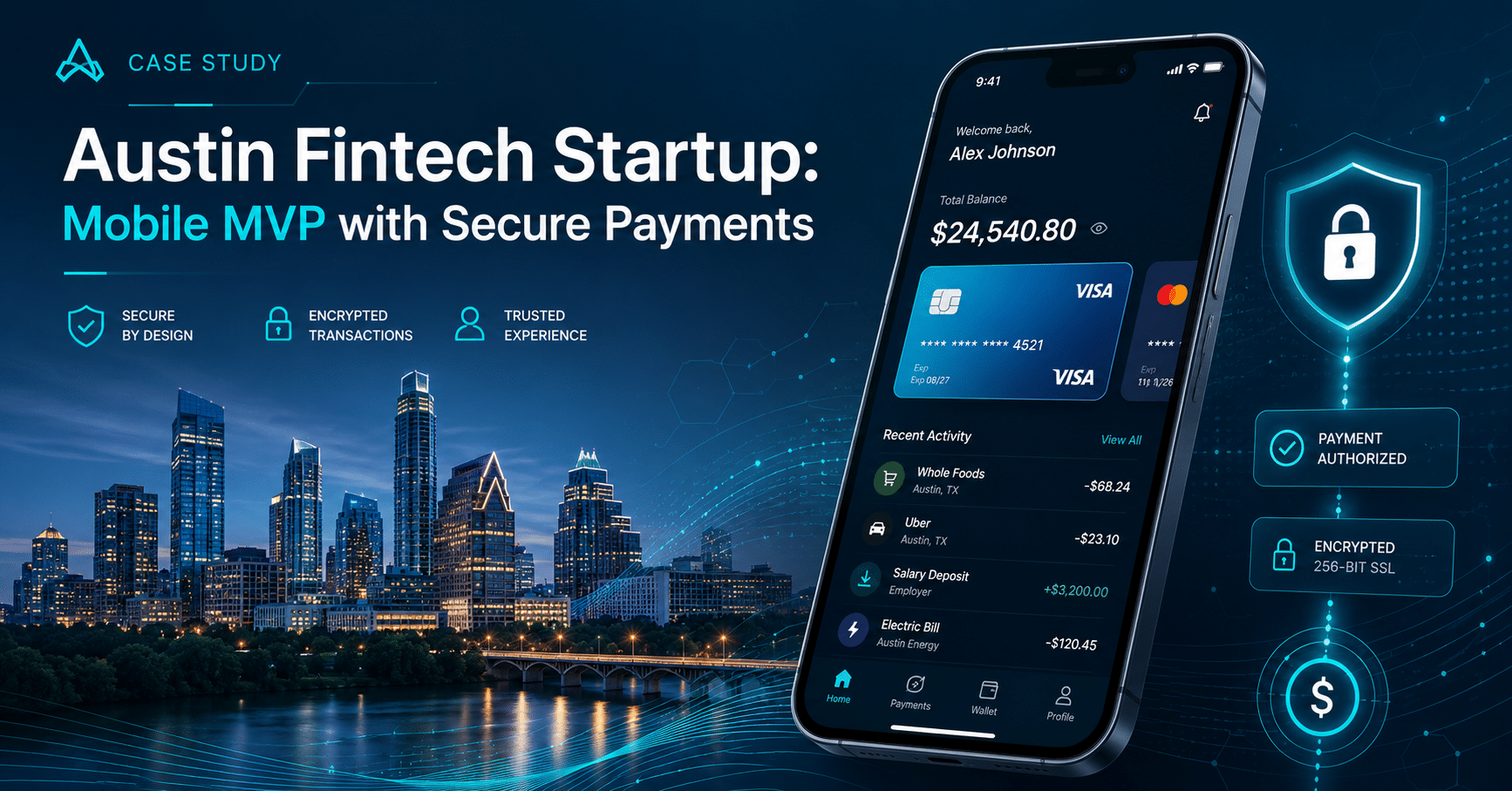
Industry: Fintech / Consumer Finance Location: Austin, TX Platforms: iOS (Android in Phase 2) Engagement Duration: 12 weeks Status: Under NDA — Client name anonymized Client Overview Our client is an early-stage Austin-based fintech startup founded by former product leaders from major financial services and consumer tech companies. The startup is building a consumer app that helps users automate savings, manage subscriptions, and track financial goals — competing in a space with both incumbent banks and well-funded neobanks. The founders engaged Taction Software to build their seed-funded MVP for an investor demo and limited beta launch. The Challenge Fintech MVPs face a unique combination of constraints: 1. Investor Demo Deadline The founders had committed to a working iOS app for a Series A pitch in 12 weeks. The MVP needed to demonstrate the full core user journey — account creation, KYC, bank linking, automated savings rules, and dashboard — to a working standard. 2. Security Non-Negotiables Even at MVP stage, the app handled real financial data: bank credentials (via Plaid), Personally Identifiable Information (PII), and eventually real money movement. Security couldn’t be deferred. 3. KYC and Compliance The product required Know Your Customer (KYC) identity verification, AML monitoring hooks, and SOC 2-aligned data handling — even though the MVP launched to a private beta. 4. Future Banking Partner Flexibility The MVP integrated with a single sponsor bank, but the architecture needed to support adding a second banking partner without major rework. Our Approach Taction Software’s Austin team ran a 1-week intensive discovery with the founders to lock down the MVP scope. We made hard cuts: no Android in Phase 1, no Apple Watch companion, no advanced analytics dashboard. iOS only, core flow only. We embedded with the founders’ product designer and used a shared Figma + GitHub workflow with daily 30-minute syncs. Our fintech app development experience informed every architecture decision around payments, KYC, and data security. The Solution Core MVP Features Security Layer KYC and Compliance Integration Technology Stack Results Investor demo and beta launch in 12 weeks: Why It Worked 1. Brutal scope discipline — Saying no to features in week 1 enabled saying yes to a working demo in week 12. 2. Security as a first-class concern — Building security in from day one prevented the costly “we’ll add security later” trap that kills many fintech MVPs. 3. Founder collaboration — The founders met our Austin team weekly at our Southwest Parkway office for prototype reviews. Founder energy in the room kept the team aligned on the vision. 4. Architectural foresight — The MVP was minimum viable, not minimum throwaway. The codebase that demoed at Series A became the foundation of the production app. Building a Fintech App in Austin? If you’re building a fintech product in Austin and need a development partner who understands both the speed of startup execution and the seriousness of financial data, our team can help. Connect with our Austin fintech app developers or call (512) 299-0926. Related Services:
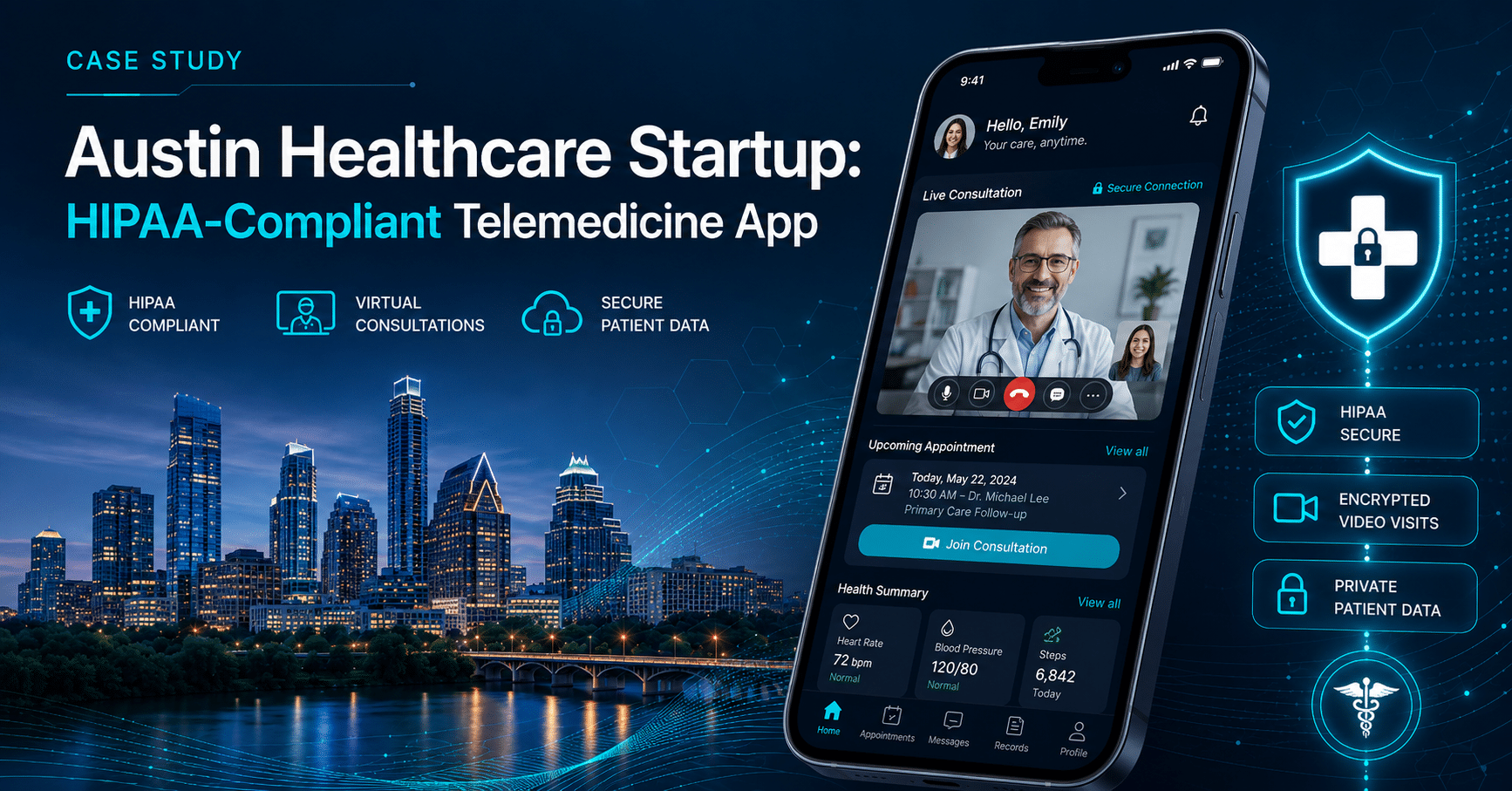
Industry: Digital Health / Telemedicine Location: Austin, TX Platforms: iOS, Android, Web Provider Portal Engagement Duration: 6 months Status: Under NDA — Client name and identifying details anonymized Client Overview Our client is an Austin-based digital health startup founded by physicians and healthcare technologists. The company connects patients with licensed providers for virtual urgent care, mental health support, and chronic condition management across Texas and neighboring states. When the client engaged Taction Software, they had validated their service model with a pilot program but needed a production-grade telemedicine platform to scale across multiple states. The Challenge The client faced four interconnected challenges: 1. HIPAA and HITECH Compliance from Day One The app needed to handle Protected Health Information (PHI) — including patient demographics, medical history, prescriptions, and video consultations. Every data flow, storage decision, and third-party integration had to meet HIPAA Privacy and Security Rule requirements. 2. Real-Time Video Consultations The platform required low-latency, HIPAA-compliant video calling with screen sharing for prescription review, file sharing for lab results, and recording capability where state regulations allowed. 3. Multi-Stakeholder Workflows Three distinct user types needed dedicated experiences: patients (mobile-first), providers (web-based clinical workflow), and administrators (operations and compliance oversight). 4. EHR Integration Roadmap While the MVP didn’t require EHR integration, the architecture needed to support future HL7 FHIR integration with Epic, Cerner, and athenahealth. Our Approach Taction Software’s Austin team led discovery sessions with the client’s clinical and product teams to map the complete patient and provider journey. We architected the platform using a HIPAA-by-default approach — every component, from infrastructure to UI, was designed with compliance as a baseline rather than an afterthought. We worked in 2-week agile sprints with weekly demos and a dedicated Slack channel for the client’s product team. Our HIPAA-compliant mobile app development methodology guided every technical decision. The Solution Patient Mobile App (iOS + Android) Provider Web Portal Admin Console Technology Stack Results 6-month build to production launch: Why It Worked 1. HIPAA-first architecture — Designing for compliance from sprint 1 avoided costly retrofits. Every data flow, BAA, and audit log was built in, not bolted on. 2. Austin team collaboration — The client met regularly with our Austin team at our Southwest Parkway office, enabling fast feedback loops and trust. 3. Cross-platform efficiency — Using React Native instead of two native codebases reduced build time by an estimated 40% while delivering native-feel performance. 4. Scalable foundation — The platform now supports geographic expansion and EHR integration without architectural rework. Looking to Build a Healthcare App? If you’re building a HIPAA-compliant healthcare app in Austin or across the US, our team can help. Connect with our Austin healthcare app developers or call (512) 299-0926. Related Services:
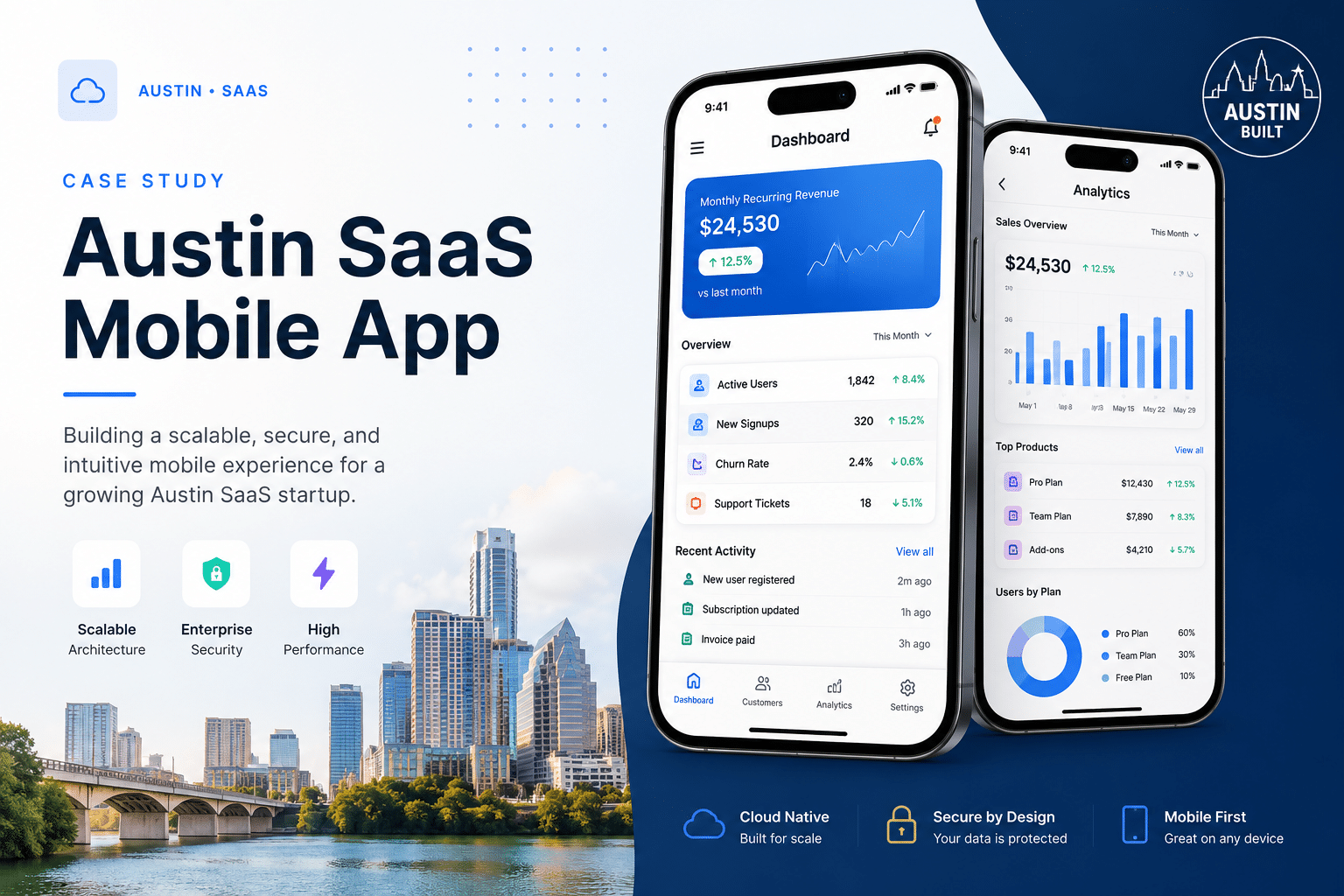
Project Overview Industry Digital Health / Telemedicine Location Austin, TX Platforms iOS, Android, Web Provider Portal Engagement Duration 6 months Status Under NDA — Client name and identifying details anonymized Client Overview Our client is an Austin-based digital health startup founded by physicians and healthcare technologists. The company connects patients with licensed providers for virtual urgent care, mental health support, and chronic condition management across Texas and neighboring states. When the client engaged Taction Software, they had validated their service model with a pilot program but needed a production-grade telemedicine platform to scale across multiple states. The Challenge The client faced four interconnected challenges: HIPAA and HITECH Compliance from Day One The app needed to handle Protected Health Information (PHI) — including patient demographics, medical history, prescriptions, and video consultations. Every data flow, storage decision, and third-party integration had to meet HIPAA Privacy and Security Rule requirements. Real-Time Video Consultations The platform required low-latency, HIPAA-compliant video calling with screen sharing for prescription review, file sharing for lab results, and recording capability where state regulations allowed. Multi-Stakeholder Workflows Three distinct user types needed dedicated experiences: patients (mobile-first), providers (web-based clinical workflow), and administrators (operations and compliance oversight). EHR Integration Roadmap While the MVP didn’t require EHR integration, the architecture needed to support future HL7 FHIR integration with Epic, Cerner, and athenahealth. Our Approach Taction Software’s Austin team led discovery sessions with the client’s clinical and product teams to map the complete patient and provider journey. We architected the platform using a HIPAA-by-default approach — every component, from infrastructure to UI, was designed with compliance as a baseline rather than an afterthought. We worked in 2-week agile sprints with weekly demos and a dedicated Slack channel for the client’s product team. Our HIPAA-compliant mobile app development methodology guided every technical decision. The Solution Patient Mobile App (iOS + Android) Authentication and Account Management Secure account creation with multi-factor authentication and HIPAA-compliant identity verification. Symptom Checker and Triage Symptom checker with triage logic to route patients to appropriate care levels. Provider Availability and Booking Real-time provider availability with both instant and scheduled appointment options. Video Consultations HIPAA-compliant video consultations with end-to-end encryption, screen sharing, and file exchange. Secure Messaging Encrypted messaging between patient and provider with full audit trail. Prescription and Records Prescription delivery tracking, health record uploads, and complete visit history. Provider Web Portal Provider Dashboard Real-time patient queue with priority filtering and triage information. Clinical Notes In-call clinical notes with SOAP note templates and ICD-10 lookup. E-Prescribing Surescripts integration for electronic prescriptions to retail and mail-order pharmacies. Scheduling Provider availability scheduling with state-by-state licensing controls. Admin Console Operations Dashboard Real-time visit tracking, provider utilization, and patient wait-time metrics. Compliance Audit Logs HIPAA-required audit logs with tamper-proof storage and exportable reports. Provider Credentialing Provider onboarding workflow with credentialing and state license verification. Reporting and Analytics Operational and clinical analytics with customizable reports. Technology Stack Mobile React Native (iOS and Android from single codebase) Web Portal React with TypeScript Backend Node.js with Express Database PostgreSQL on AWS RDS with encryption at rest Video Infrastructure HIPAA-compliant WebRTC service with signed BAA Cloud Platform AWS HIPAA-eligible services (EC2, S3, RDS, CloudWatch) Authentication OAuth 2.0 with MFA, AWS Cognito Compliance Infrastructure Signed BAAs with all third-party vendors, automated audit logging Results Launch Timeline 6-month build to production launch on schedule. Compliance Validation Successfully passed third-party HIPAA security assessment before launch. Provider Onboarding Onboarded 40+ licensed providers across Texas during soft launch. Patient Adoption Processed 1,500+ patient consultations in first 90 days. App Store Performance 4.7-star average rating across App Store and Google Play. Platform Reliability 99.8% uptime in first 6 months. Architectural Validation Architecture validated for future EHR integration with Epic and Cerner. Why It Worked HIPAA-First Architecture Designing for compliance from sprint 1 avoided costly retrofits. Every data flow, BAA, and audit log was built in, not bolted on. Austin Team Collaboration The client met regularly with our Austin team at our Southwest Parkway office, enabling fast feedback loops and trust. Cross-Platform Efficiency Using React Native instead of two native codebases reduced build time by an estimated 40% while delivering native-feel performance. Scalable Foundation The platform now supports geographic expansion and EHR integration without architectural rework. Looking to Build a Healthcare App? If you’re building a HIPAA-compliant healthcare app in Austin or across the US, our team can help. Connect with our Austin healthcare app developers or call (512) 299-0926. Related Resources Related Services

Overview We partnered with a fashion-tech startup to build a social fashion application that connects users through style discovery, outfit sharing, and real-time engagement. The goal was to create a platform where users could explore fashion trends, share their looks, and interact with a like-minded community. The application bridges the gap between social networking and eCommerce, enabling users to discover styles and make confident fashion decisions. Client Requirement The client wanted a modern mobile application that could: Challenges Solution We developed a feature-rich social fashion mobile application with: To further enhance user experience, we also leveraged concepts similar to ourAugmented Reality solutions, enabling brands to visualize fashion products better. 👉 Related:Explore our advanced solution here:https://www.tactionsoft.com/case-studies/augmented-reality-application/ Technology Stack Results & Impact Outcome The application successfully launched as a social-driven fashion platform, helping users connect, discover trends, and express their style digitally.
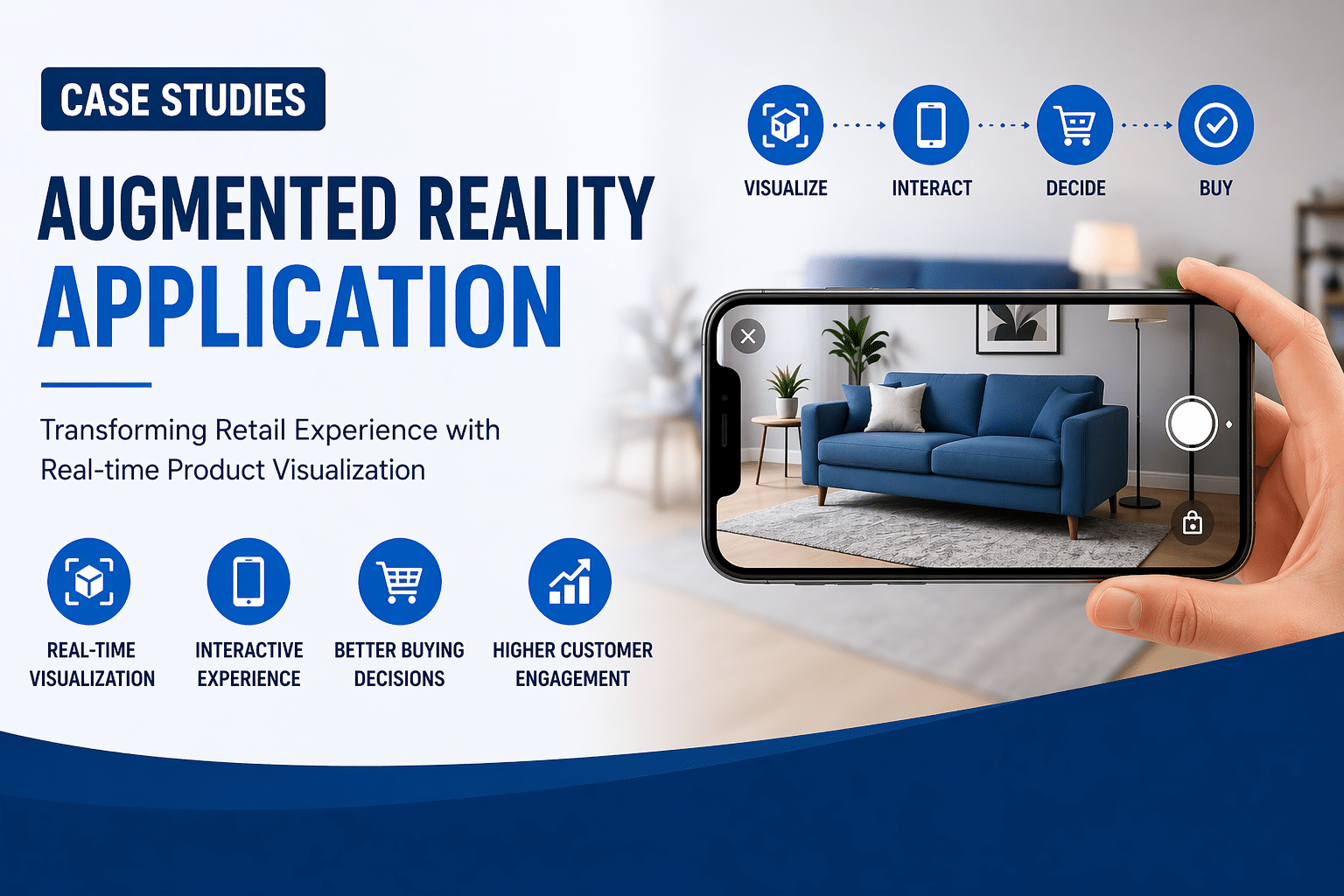
Project Overview Retail businesses are increasingly adopting immersive technologies to enhance customer engagement and improve buying decisions. The client required an innovative mobile application that allows users to visualize products in real-world environments before making a purchase. The objective was to develop an augmented reality-based solution that enhances user experience—similar to how modern custom software development solutions enable advanced digital experiences across industries. Business Objectives The client aimed to: This aligns with innovation trends seen in custom app development, where mobile-first experiences drive user engagement. Challenges The project involved several technical challenges: These challenges are similar to those addressed in real-time monitoring systems, where performance and real-time processing are critical. Solution We developed an Android-based augmented reality application designed to deliver a seamless and immersive user experience. Key capabilities included: The system architecture followed best practices similar to sales process automation systems, ensuring efficiency and usability. Technology Stack Results and Impact The solution delivered significant benefits: This transformation reflects the impact of innovative platforms similar to patient care management systems, where user-centric solutions improve outcomes. Conclusion This case study demonstrates how augmented reality can transform the retail experience by bridging the gap between digital and physical environments. By enabling real-time visualization and interactive engagement, the application significantly improved customer experience and business outcomes. Businesses adopting such technologies can stay ahead in competitive markets—just like modern automated platforms used in advanced systems such as order and contract management automation solutions.

Project Overview Education businesses often manage complex sales cycles involving multiple services, stakeholders, and communication channels. The client required a centralized platform to streamline sales operations, improve team coordination, and enhance visibility across processes. The objective was to implement a scalable CRM-driven system to automate workflows and improve operational efficiency—similar to how modern custom software development solutions enable automation across industries. Business Objectives The client aimed to: This aligns with digital transformation strategies seen in healthcare product development, where centralized systems improve operational workflows. Challenges The project involved several key challenges: These challenges are similar to those addressed in healthcare software development, where workflow optimization and data handling are critical. Solution We implemented a customized SuiteCRM-based sales automation system tailored to the education business. Key capabilities included: The architecture followed best practices similar to custom app development, ensuring scalability and flexibility. Technology Stack Results and Impact The solution delivered significant improvements: This transformation reflects the efficiency gains seen in systems like patient care management systems, where CRM-driven automation enhances operational outcomes. Conclusion This case study demonstrates how SuiteCRM can be leveraged to automate complex sales processes in the education sector. By centralizing workflows, improving visibility, and reducing manual intervention, the solution significantly enhanced productivity and operational efficiency. Organizations adopting similar CRM-driven systems can achieve scalable growth and improved decision-making—just like modern automated platforms such as real-time traffic monitoring systems.
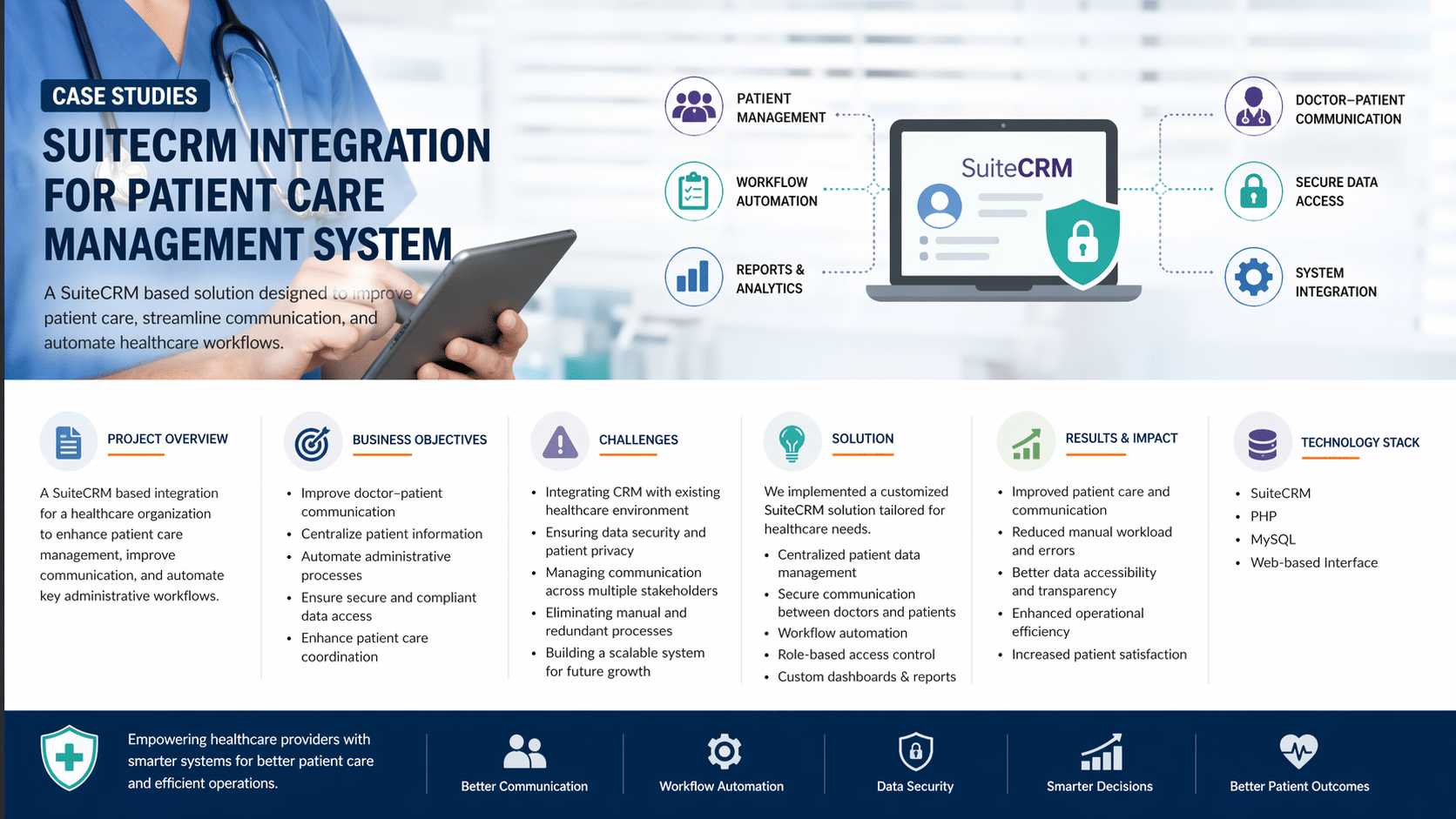
Project Overview Healthcare providers require efficient systems to manage patient relationships, streamline workflows, and ensure secure communication. The client needed a centralized platform that could connect doctors, patients, and administrative staff while improving operational efficiency. The objective was to build a scalable solution that enhances patient care through automation—similar to how advanced healthcare software development solutions optimize clinical workflows and data management. Business Objectives The client aimed to: This aligns with modern approaches in healthcare product development, where integrated systems improve efficiency and outcomes. Challenges The project presented several challenges: These are common challenges in HIPAA-compliant software development, where security and compliance are critical. Solution We implemented a customized SuiteCRM-based solution tailored for healthcare use cases. Key features included: The system architecture followed best practices similar to custom app development, ensuring flexibility and seamless integration. Technology Stack Results and Impact The solution delivered measurable improvements: This transformation reflects the impact of well-designed systems similar to custom software development solutions, where automation drives efficiency and scalability. Conclusion This case study demonstrates how SuiteCRM can be effectively integrated into healthcare systems to improve patient care and operational efficiency. By centralizing communication, automating workflows, and ensuring secure data handling, the solution enabled a more connected and efficient healthcare ecosystem. For organizations exploring similar solutions, integrating CRM with healthcare systems is a key step toward digital transformation—just like modern real-time monitoring systems used in advanced platforms such as your traffic enforcement solution.
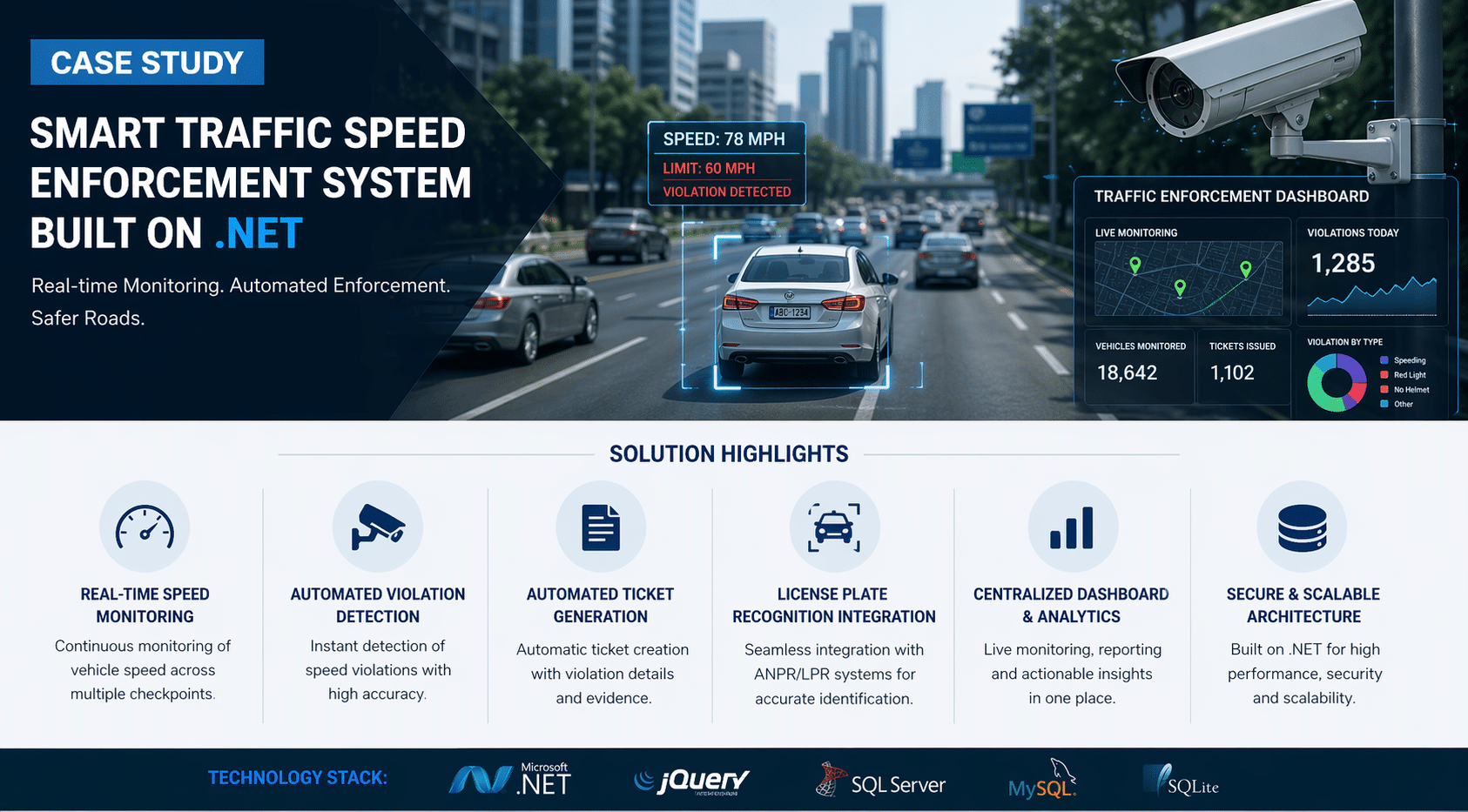
Project Overview Modern traffic management requires intelligent systems capable of monitoring, analyzing, and responding in real time. The client needed a scalable platform to automate vehicle speed monitoring and enforce regulations efficiently. The goal was to replace manual workflows with a centralized system capable of detecting violations, generating tickets automatically, and delivering actionable insights—similar to how advanced custom software development solutions power large-scale digital ecosystems. Business Objectives The client required a solution that could: This approach aligns with modern digital transformation strategies used in healthcare product development, where real-time processing is essential. Challenges The project involved several technical complexities: These challenges are similar to those addressed in healthcare software development, where performance and accuracy are critical. Solution We developed a high-performance system using the .NET framework, designed for scalability, accuracy, and real-time processing. Key capabilities included: The system architecture followed principles similar to those used in custom app development, ensuring flexibility and scalability. Technology Stack Results and Impact The implemented solution delivered measurable improvements: The outcome reflects the reliability seen in HIPAA-compliant software development, where precision and performance are essential. Conclusion This case study demonstrates how a custom-built .NET solution can support large-scale, real-time monitoring systems. By combining automation, data processing, and system integration, the platform transformed traditional traffic enforcement into a smart, data-driven system. Such scalable solutions are also critical in regions like healthcare software development in Minnesota, where performance and data accuracy are equally important.
- 1
- 2