Meet Sarah, a 45-year-old diabetic patient who never misses her medication anymore. She doesn’t forget her doctor appointments, and she gets instant answers to her health questions at 3 AM without waiting for office hours. The secret? A healthcare chatbot named DiabetesPal that acts as her 24/7 health companion.
Healthcare chatbots are revolutionizing medicine: They provide round-the-clock patient support, reduce administrative workload by up to 73%, deliver $3.6 billion in global cost savings, and handle everything from appointment scheduling to symptom checking—all while maintaining HIPAA compliance and improving patient satisfaction scores by 40%+.
The healthcare chatbot market is exploding: Valued at $230.28 million in 2023, it’s projected to reach $943.64 million by 2030 with a CAGR of 19.16%. Why? Because hospitals desperately need solutions for overworked staff, patients demand instant access, and AI technology finally delivers human-like conversations that actually help.
At Taction Software, we’ve built 785+ healthcare solutions including sophisticated AI chatbots integrated with Epic, Cerner, and Athena EHR systems. Our chatbot platforms deliver 96% patient satisfaction, zero HIPAA violations, and seamless conversational AI that reduces no-shows by 20-30% while cutting administrative costs 40-60%.
This complete guide covers everything you need to build, implement, and scale healthcare chatbots—from NLP architecture and HIPAA compliance to real-world use cases and development costs.
What Are Healthcare Chatbots?
Definition & Core Technology
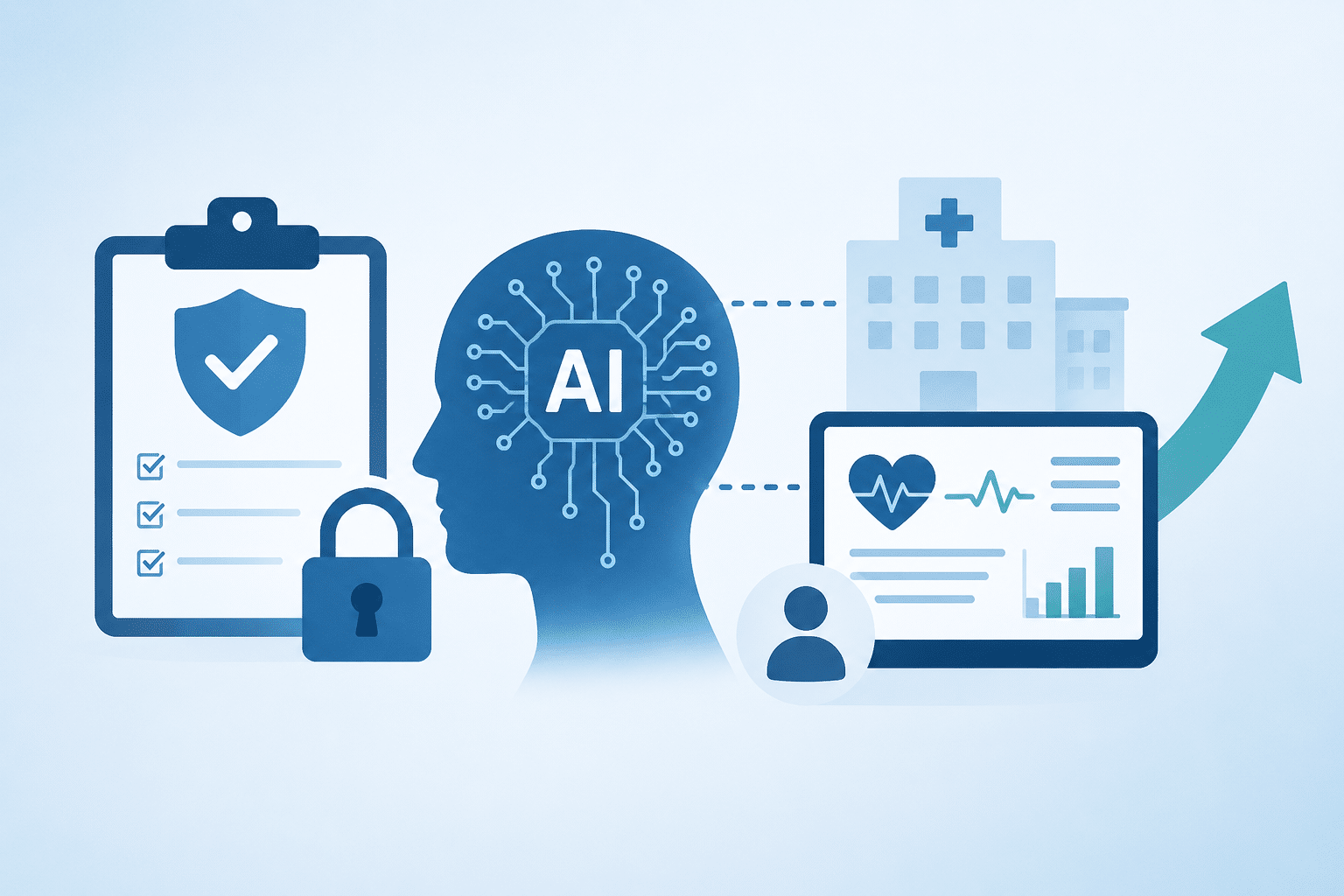
Healthcare chatbots are AI-powered conversational interfaces built with machine learning algorithms, including Natural Language Processing (NLP) and Natural Language Understanding (NLU), designed to simulate human conversation and provide real-time assistance to patients, providers, and healthcare staff.
Core Technologies:
1. Natural Language Processing (NLP):
- Text analysis and interpretation
- Intent recognition
- Context understanding
- Sentiment analysis
2. Natural Language Understanding (NLU):
- Semantic comprehension
- Entity extraction
- Conversation flow management
- Multi-turn dialogue handling
3. Machine Learning (ML):
- Pattern recognition
- Continuous improvement
- Predictive responses
- Personalization algorithms
4. Large Language Models (LLMs):
- GPT-based architectures
- Medical knowledge databases
- Clinical reasoning capabilities
- Human-like conversation quality
Learn about AI/ML in healthcare.
How Healthcare Chatbots Work
The Conversation Flow:
Step 1: Input Processing
- Patient enters text or voice query
- Speech recognition (if voice-enabled)
- Text normalization and cleaning
- Language detection
Step 2: Intent Classification
- NLU engine analyzes query
- Identifies user intent
- Extracts key entities (symptoms, medications, dates)
- Determines conversation context
Step 3: Response Generation
- Queries knowledge base
- Applies business logic
- Generates appropriate response
- Personalizes based on patient history
Step 4: Action Execution
- Schedules appointments
- Sends medication reminders
- Triggers escalation (if needed)
- Updates patient records
Step 5: Continuous Learning
- Logs conversation data
- Analyzes user satisfaction
- Retrains ML models
- Improves accuracy over time
Types of Healthcare Chatbots
1. Informational Chatbots:
- Provide health information
- Answer FAQs
- Share educational content
- Direct to resources
Example: WebMD symptom checker providing flu information and local clinic locations.
2. Conversational Chatbots:
- Natural dialogue capability
- Context-aware responses
- Multi-turn conversations
- Personalized interactions
Maturity Levels:
Level 1 (Rule-Based):
- Pre-defined responses only
- Keyword matching
- Linear conversation flow
- Limited flexibility
Level 2 (Intent-Based):
- Understands user intent
- Handles variations
- Context awareness
- Natural conversation
Level 3 (AI-Powered):
- Deep learning models
- Predictive capabilities
- Emotional intelligence
- Continuous improvement
3. Prescriptive Chatbots:
- Therapeutic interventions
- Behavioral health support
- Treatment recommendations
- Outcome tracking
Example: Woebot for cognitive behavioral therapy (CBT), helping users manage depression and anxiety through evidence-based conversations.
Explore mental health app development.
The Impact of AI on Healthcare Chatbots
AI Creates Human-Like Interactions
The Transformation:
Traditional Chatbots (2015-2020):
- Rigid scripts
- Poor context understanding
- Frustrating dead ends
- 40-50% accuracy
AI-Powered Chatbots (2020-2026):
- Natural conversations
- Deep context awareness
- Self-learning capabilities
- 85-95% accuracy
Real-World Impact:
Northwell Health Case Study:
- 96% patient satisfaction with post-discharge chatbots
- 40% reduction in readmissions
- 73% decrease in follow-up calls
- Enhanced patient engagement
Cleveland Clinic Results:
- 25% increase in appointment completion
- 50% reduction in phone volume
- $2.1M annual savings in administrative costs
- 92% accuracy in symptom triage
Machine Learning Revolutionizes Care Delivery
Key Applications:
1. Symptom Checking:
- Analyzes 18,000+ medical articles
- Cross-references patient history
- Provides differential diagnoses
- Triages to appropriate care level
2. Medication Management:
- Drug interaction checking
- Dosage verification
- Refill reminders
- Side effect monitoring
3. Chronic Disease Management:
- Daily symptom tracking
- Treatment adherence
- Lifestyle coaching
- Early warning detection
4. Mental Health Support:
- 24/7 crisis intervention
- CBT techniques
- Mood tracking
- Therapy complement
Learn about our AI diagnostic solutions.
Market Growth & Adoption
Global Market Statistics:
Current State (2024-2025):
- Market size: $230.28M
- Annual growth: 19.16% CAGR
- Projected 2030: $943.64M
Adoption Rates:
- 10% of providers currently use AI chatbots
- 50% planning to implement within 2 years
- 90% of patients willing to use chatbots
- 87% satisfaction rate among users
Cost Savings Projection:
- $3.6 billion global savings by 2027
- $20-30 per interaction saved vs. phone calls
- 40-60% reduction in admin costs
- $150-250K annual savings per mid-size practice
Benefits of Healthcare Chatbots
1. 24/7 Patient Access & Engagement
Round-the-Clock Availability:
Instant Support:
- No wait times or phone holds
- Immediate response to queries
- After-hours assistance
- Holiday/weekend coverage
Patient Benefits:
- Convenience: Access from anywhere, anytime
- Speed: Answers in seconds vs. hours/days
- Comfort: No judgment for “simple” questions
- Continuity: Consistent information quality
Provider Benefits:
- Reduced phone volume: 40-50% decrease
- Better resource allocation: Staff focus on complex cases
- Improved satisfaction: Shorter wait times
- Enhanced accessibility: Serve more patients
Example Metrics:
- Mayo Clinic: 60% of patient queries resolved by chatbot without human intervention
- Kaiser Permanente: 35% reduction in nurse call volume
- Johns Hopkins: 24/7 symptom checking serving 100K+ monthly users
2. Massive Cost Reduction
Administrative Efficiency:
Time Savings:
- 12 minutes saved per appointment (scheduling automation)
- 20-30 minutes saved per patient intake
- 45-60 minutes saved per day per provider
- 2-3 FTE reduction per 50-provider practice
Cost Breakdown:
Medium Practice (25 providers, 500 patients/day):
Before Chatbot:
- Front desk staff (5 FTE): $200K
- Phone system costs: $25K
- No-show revenue loss: $180K
- Appointment errors: $45K
- Total annual cost: $450K
After Chatbot:
- Front desk staff (3 FTE): $120K
- Chatbot platform: $60K
- Reduced no-shows: $54K loss
- Minimal errors: $5K
- Total annual cost: $239K
- Net savings: $211K (47% reduction)
Large Health System (100+ providers):
- 73% admin workload reduction
- $1.5-2.5M annual savings
- 8-12 FTE reallocation
- ROI: 280-450% within Year 1
3. Reduced Hospital Visits & Readmissions
Triage Effectiveness:
Smart Symptom Assessment:
- Appropriate care level: Emergency vs. urgent vs. primary
- Reduced ER visits: 15-25% decrease for non-emergent cases
- Better outcomes: Right care at right time
- Cost avoidance: $500-2,000 per diverted ER visit
Post-Discharge Support:
Automated Follow-Up:
- Daily check-ins
- Medication adherence tracking
- Symptom monitoring
- Early complication detection
Results:
- 30-40% readmission reduction
- $10,000-15,000 saved per prevented readmission
- 96% patient satisfaction (Northwell Health)
- Better outcomes through continuous monitoring
Explore remote patient monitoring.
4. Improved Patient Education & Compliance
Personalized Health Information:
Educational Content Delivery:
- Disease-specific information
- Treatment explanations
- Medication instructions
- Lifestyle modifications
Medication Adherence:
- Automated reminders: Time and dosage
- Refill notifications: Never run out
- Side effect monitoring: Early detection
- Interaction warnings: Safety alerts
Impact on Adherence:
- 40-60% improvement in medication compliance
- 35% reduction in missed doses
- 25% better treatment outcomes
- $290 billion US healthcare waste from non-adherence (addressable)
5. Enhanced Provider Productivity
Administrative Burden Relief:
Automated Tasks:
- Appointment scheduling (100% automation possible)
- Patient registration (90% automation)
- Insurance verification (85% automation)
- Prescription refills (70% automation)
Transform Your App Development Process with Taction
Time Reclaimed:
Per Provider Daily:
- 45-90 minutes less admin work
- 3-5 additional patient appointments possible
- $200-400 additional revenue potential
- Reduced burnout risk
Clinic-Wide Impact (25 providers):
- 18-37 hours daily admin time saved
- 75-125 additional appointments weekly
- $3,900-7,500 additional weekly revenue
- $200K-390K annual revenue increase
Learn about clinical workflow automation.
Healthcare Chatbot Use Cases
1. Appointment Scheduling & Management
Automated Booking:
Core Capabilities:
- Real-time availability: Sync with EHR calendars
- Smart scheduling: Match specialty, location, insurance
- Multi-channel: Web, mobile, SMS, voice
- Confirmations: Automated reminders via preferred channel
Rescheduling & Cancellations:
- Self-service changes
- Automatic waitlist management
- Insurance verification
- No-show reduction
Results:
- 20-30% no-show reduction
- 40% phone volume decrease
- 95% booking accuracy
- 24/7 availability
Taction Example: Built appointment chatbot for 150-provider group achieving:
- 35% reduction in phone calls
- $180K annual savings
- 92% patient satisfaction
- 15-minute average implementation per provider
2. Symptom Checking & Triage
Intelligent Assessment:
Conversation Flow:
- Initial symptoms: “What brings you in today?”
- Detailed questions: Severity, duration, associated symptoms
- Medical history: Relevant conditions, medications
- Risk assessment: Age, comorbidities, vital trends
- Recommendation: ER, urgent care, primary care, self-care
Clinical Decision Support:
- Algorithm-based: Evidence-based protocols
- AI-enhanced: Pattern recognition from 100K+ cases
- Context-aware: Personal health history integration
- Safety-first: Conservative escalation protocols
Accuracy Metrics:
- 85-92% agreement with physician assessment
- 95% sensitivity for emergency conditions
- 15-25% ER diversion for non-urgent cases
- $1.2M-2.8M savings annually (large health system)
Discover AI diagnostic tools.
3. Medication Management & Reminders
Comprehensive Medication Support:
Daily Reminders:
- Scheduled notifications: Customized timing
- Dosage instructions: Clear, simple language
- Refill alerts: 7-day advance notice
- Adherence tracking: Daily completion logs
Smart Features:
- Drug interactions: Real-time checking
- Side effects: Monitoring and reporting
- Contraindications: Allergy and condition checks
- Missed dose guidance: What to do if forgotten
Adherence Improvement:
- 40-60% better compliance
- 50% reduction in missed doses
- 35% fewer medication errors
- 25% better clinical outcomes
4. Patient Education & Health Literacy
Personalized Information Delivery:
Educational Content:
- Diagnosis explanations: What does this mean?
- Treatment options: Benefits and risks
- Pre/post-procedure: What to expect
- Lifestyle modifications: Diet, exercise, stress management
Adaptive Learning:
- Literacy level matching: Grade 6-8 reading level default
- Language preference: 50+ languages
- Cultural sensitivity: Culturally appropriate content
- Learning style: Visual, audio, text options
Impact:
- 70% improvement in health knowledge
- 45% better treatment adherence
- 30% reduction in confusion-related calls
- 85% patient satisfaction with education
5. Mental Health Support
Therapeutic Chatbots:
CBT-Based Interventions:
- Mood tracking: Daily emotional check-ins
- Thought challenging: Cognitive restructuring
- Behavioral activation: Activity scheduling
- Coping skills: Stress management techniques
24/7 Crisis Support:
- Immediate availability: No wait for appointments
- Non-judgmental: Reduces stigma barriers
- Evidence-based: Clinical protocols
- Human escalation: Crisis hotline integration
Woebot Results:
- Therapeutic alliance: Comparable to human therapist (5 days)
- Symptom reduction: 30-40% in depression/anxiety
- Engagement: 80% complete 2+ weeks
- Cost: $39/month vs. $150-250/session
Learn about mental health chatbot development.
6. Chronic Disease Management
Ongoing Condition Monitoring:
Diabetes Management:
- Glucose tracking: Daily readings input/analysis
- Meal logging: Carb counting and recommendations
- Medication reminders: Insulin and oral meds
- Trend analysis: Pattern identification and alerts
Ready to Build Your Mobile App with Agile Excellence?
Hypertension Monitoring:
- BP tracking: Home monitoring integration
- Medication adherence: Daily check-ins
- Lifestyle coaching: Diet and exercise tips
- Alert thresholds: Automatic provider notification
COPD/Asthma Support:
- Symptom monitoring: Daily assessment
- Inhaler tracking: Usage and technique
- Environmental triggers: Weather, allergens
- Action plan: Step-by-step guidance
Outcomes:
- 50% reduction in ER visits
- 30-40% fewer hospitalizations
- $3,500-7,500 annual savings per patient
- 85% patient engagement rate
Explore chronic disease management solutions.
7. Insurance & Billing Support
Automated Financial Assistance:
Coverage Verification:
- Real-time eligibility: Instant insurance checks
- Benefit details: Copays, deductibles, coverage
- Prior authorization: Status and requirements
- Out-of-pocket estimates: Cost transparency
Billing Inquiries:
- Bill explanations: Line-by-line breakdown
- Payment plans: Setup and management
- Claims status: Real-time tracking
- Appeals assistance: Documentation guidance
Financial Counseling:
- Assistance programs: Charity care, financial aid
- Payment options: Credit card, payment plans
- Cost comparisons: Generic vs. brand medications
- HSA/FSA: Eligible expenses
Results:
- 40% reduction in billing inquiries
- 30% faster payment collection
- 25% fewer claim denials
- 90% patient satisfaction
8. Post-Discharge Care & Follow-Up
Recovery Monitoring:
Automated Check-Ins:
- Daily assessments: Symptoms, pain levels, concerns
- Wound care: Photo upload and analysis
- Activity tracking: Mobility and exercise
- Red flag detection: Early complication warning
Care Coordination:
- Medication reconciliation: Post-hospital changes
- Follow-up scheduling: Automatic appointment booking
- Home health: Coordination with visiting nurses
- DME orders: Medical equipment delivery
Readmission Prevention:
- Risk scoring: ML-based prediction
- Proactive intervention: Early escalation
- Patient education: Discharge instructions
- Family engagement: Caregiver involvement
Northwell Health Results:
- 96% patient satisfaction
- 30-40% readmission reduction
- $10K-15K saved per prevented readmission
- $4.5M annual savings (500-bed hospital)
Top Healthcare Chatbot Examples
1. Ada Health
Overview:
- Founded: 2016, Berlin
- Users: 12+ million globally
- Languages: 10+ languages
- Platform: iOS, Android, Web
Core Features:
- Symptom assessment: 1,500+ conditions
- AI engine: Trained on 18,000+ medical articles
- Personalized reports: Shareable with doctors
- Provider matching: Local healthcare services
Technology:
- Machine learning algorithms
- Natural language processing
- Bayesian inference network
- Continuous learning from user feedback
Accuracy:
- 90% diagnosis concordance with physicians
- 1.5M+ assessments monthly
- 150+ countries served
- 92% user satisfaction
2. Babylon Health
Overview:
- Founded: 2013, UK
- Users: 4+ million
- Markets: UK, US, Canada, Asia
- Services: AI + live doctors
Dual Approach:
- AI Symptom Checker: Initial assessment
- Live GP Consultations: Video appointments
- Prescription Service: E-prescribing
- Referrals: Specialist connections
Clinical Capabilities:
- Triage accuracy: 80-85%
- Conditions covered: 2,000+
- Response time: <2 minutes average
- Availability: 24/7 AI, extended hours GP
NHS Partnership:
- Serving 50,000+ patients
- 90% patient satisfaction
- 30% GP workload reduction
- £5M+ annual NHS savings
3. Buoy Health
Overview:
- Founded: 2014, Harvard Innovation Lab
- Training data: 18,000+ clinical papers
- Focus: Symptom checking and care navigation
- Platform: Web-based, free to use
Intelligent Features:
- Contextual questioning: Adaptive interview
- Differential diagnosis: Multiple possibilities
- Care recommendations: ER, urgent, primary, self-care
- Provider matching: Insurance-based routing
Clinical Validation:
- Published research: JMIR, JAMIA
- Accuracy: 87% triage concordance
- Speed: 3-minute average assessment
- Transparency: Explains reasoning
Healthcare Integration:
- Partner health systems: 50+
- White-label solutions: Branded chatbots
- EHR integration: Epic, Cerner
- Analytics dashboard: Population health insights
4. Woebot Health
Overview:
- Founded: 2017, Stanford University
- Focus: Mental health and CBT
- Evidence-based: Clinical trial validated
- Platform: iOS, Android
Therapeutic Approach:
- Cognitive Behavioral Therapy (CBT)
- Daily conversations: 5-10 minutes
- Mood tracking: Emotional patterns
- Skill building: Coping strategies
Clinical Evidence:
- Randomized controlled trial: Published in JMIR
- Depression reduction: 30-40% in 2 weeks
- Anxiety reduction: 25-35% improvement
- Engagement: 80% complete 2+ weeks
- Therapeutic alliance: Comparable to human therapist
Unique Features:
- Personality: Warm, empathetic, witty
- Privacy: HIPAA-compliant, anonymous option
- Cost: $39/month vs. $150-250/session therapy
- Accessibility: 24/7, no waiting lists
5. Your.MD (Now Healthily)
Overview:
- Founded: 2012, London
- Rebranded: 2019 to Healthily
- Users: 6+ million
- Free service
Comprehensive Platform:
- Symptom checker: 1,000+ conditions
- Health library: 5,000+ articles
- Provider directory: Local services
- Medicine information: Drug database
AI Capabilities:
- Natural conversations: Intent-based
- Medical knowledge: Continuously updated
- Personalization: User health profile
- Multi-language: 15+ languages
Accuracy & Trust:
- Medical accuracy: 85%+ concordance
- Doctor collaboration: 100+ clinicians
- Regulatory: CE marked (medical device)
- Privacy: GDPR compliant
6. Florence (Flo)
Overview:
- Type: Medication reminder chatbot
- Platform: Facebook Messenger, SMS
- Named after: Florence Nightingale
- Simple, effective design
Core Functions:
- Medication reminders: Custom schedules
- Health tracking: Weight, mood, symptoms
- Appointment reminders: Calendar integration
- Information lookup: Pills, conditions
User Experience:
- Conversational: Natural language
- Easy setup: 2-minute onboarding
- Reliable: 99.9% message delivery
- Personal: Feels like a nurse assistant
7. Cancer Chatbot
Overview:
- Developer: CSource
- Specialization: Cancer information
- Platform: Facebook Messenger
- Target: Patients, families, caregivers
Knowledge Base:
- Cancer types: 100+ covered
- Treatment options: Surgery, chemo, radiation, immunotherapy
- Clinical trials: Current studies
- Support resources: Organizations, hotlines
Audience Support:
- Patients: Treatment decisions
- Families: Caregiver guidance
- Providers: Quick reference
- Researchers: Latest evidence
How to Build a Healthcare Chatbot
Step 1: Define Use Case & Conversation Pathways
Strategic Planning:
Identify Primary Use Case:
- Appointment scheduling (highest ROI, easiest start)
- Symptom checking (high value, complex)
- Medication reminders (simple, high engagement)
- Post-discharge (reduces readmissions)
- Mental health (scalable therapy)
Map Conversation Flows:
Example: Appointment Scheduling
User: "I need to see a doctor"
Bot: "I can help with that! What type of appointment?"
  → Primary care / Specialist / Follow-up

User: "Primary care"
Bot: "What's the reason for your visit?"
  → [Symptom categories displayed]

User: "Annual physical"
Bot: "Great! What insurance do you have?"
  → [Insurance verification]

Bot: "I have these times available..."
  → [Calendar display with 5 options]

User: [Selects time]
Bot: "Perfect! Confirmed for [date/time].
     Confirmation sent to [phone/email].
     Add to calendar?"
Conversation Design Principles:
- Brevity: Short messages (1-2 sentences)
- Clarity: Simple language, no jargon
- Context: Remember previous answers
- Tone: Warm, professional, empathetic
- Error handling: Graceful fallbacks
Step 2: Choose Technology Stack
NLU Platform Options:
1. Rasa (Open Source):
- Pros: Full control, customizable, free
- Cons: Requires ML expertise
- Best for: Complex, custom chatbots
- Cost: Free + infrastructure ($500-2K/month)
2. Google Dialogflow:
- Pros: Easy setup, good NLU, scalable
- Cons: Vendor lock-in
- Best for: Quick deployment
- Cost: $0.002-0.006 per request
3. Microsoft Bot Framework:
- Pros: Azure integration, enterprise features
- Cons: Microsoft ecosystem dependency
- Best for: Microsoft shops
- Cost: Consumption-based ($0.50-1 per 1K messages)
4. IBM Watson Assistant:
- Pros: Strong AI, healthcare expertise
- Cons: Expensive
- Best for: Enterprise deployments
- Cost: $140-400/month base
5. Amazon Lex:
- Pros: AWS integration, voice support
- Cons: AWS dependency
- Best for: Voice-enabled chatbots
- Cost: $0.004 per voice request, $0.00075 per text
Recommended Stack (Taction Approach):
- NLU: Rasa or Dialogflow
- Backend: Python/Node.js
- Database: PostgreSQL
- Hosting: AWS/Azure (HIPAA-compliant)
- Integration: HL7/FHIR APIs
- Analytics: Custom dashboard
Step 3: Design User Interface
Multi-Channel Strategy:
1. Web Chat Widget:
- Placement: Bottom right corner
- Design: Clean, medical brand colors
- Features: File upload, rich messages
- Accessibility: WCAG 2.1 AA compliant
2. Mobile App:
- Native: iOS/Android
- Framework: React Native/Flutter
- Features: Push notifications, voice input
- Offline: Queue messages
3. SMS/Text:
- Platform: Twilio
- Format: Conversational, brief
- Media: MMS for images
- Opt-in: Compliant with TCPA
4. Voice (Alexa/Google Assistant):
- Use cases: Medication reminders, symptom reporting
- Design: Voice-first UX
- Privacy: Skill account linking
UI/UX Best Practices:
- Avatar: Professional but friendly
- Typing indicators: Shows bot is “thinking”
- Quick replies: Buttons for common responses
- Rich messages: Cards, carousels, images
- Escalation: Clear path to human agent
- Accessibility: Screen reader support
Learn about healthcare app design.
Step 4: Implement NLP & Machine Learning
Rasa Implementation:
Intent Classification: The system learns to recognize different patient intents such as:
- Scheduling appointments (“I need to book an appointment”)
- Checking symptoms (“I have a headache”)
- Medication questions (“What’s my dosage?”)
- General inquiries (“What are your hours?”)
Entity Extraction: The NLU engine identifies and extracts key information from patient messages:
- Medical specialties (cardiology, orthopedics, primary care)
- Time references (tomorrow, next week, 3pm)
- Symptoms (headache, chest pain, dizziness)
- Medications (aspirin, insulin, antibiotics)
Dialogue Management: The chatbot manages multi-turn conversations by:
- Tracking conversation context
- Remembering previous responses
- Following logical conversation flows
- Handling interruptions gracefully
- Collecting required information step-by-step
Custom Actions: Healthcare-specific actions are implemented for:
- Insurance verification through payer APIs
- Appointment availability checking
- Medication interaction warnings
- Symptom severity assessment
- Provider matching based on specialty and insurance
Step 5: Integrate with EHR/Healthcare Systems
Critical Integrations:
1. EHR Integration (Epic/Cerner/Athena):
- Protocol: HL7 FHIR
- APIs: Patient, Appointment, Medication, Observation
- Authentication: OAuth 2.0
- Data sync: Bidirectional
Example FHIR Appointment Creation:
Creating appointments through FHIR APIs involves:
- Authentication: OAuth 2.0 token-based security
- Resource creation: Structured appointment data including patient, practitioner, date/time
- Participant management: Patient and provider availability confirmation
- Status tracking: Booking confirmation and updates
- Error handling: Validation and conflict resolution
The FHIR standard enables:
- Interoperability: Works across Epic, Cerner, Athena, and other major EHR systems
- Real-time sync: Immediate calendar updates
- Bidirectional flow: Chatbot can read existing appointments and create new ones
- Data consistency: Standardized format reduces errors
- Scalability: Handles high-volume appointment requests
2. Calendar Integration:
- Google Calendar API
- Outlook Calendar API
- iCal format support
3. SMS/Email Notifications:
- Twilio: SMS delivery
- SendGrid: Email delivery
- Template management
- Delivery tracking
4. Payment Processing:
- Stripe: Credit card
- PayPal: Alternative payment
- HSA/FSA: Dedicated processing
- Payment plans: Installment setup
Explore EHR integration services.
Step 6: Ensure HIPAA Compliance
Critical Requirements:
Technical Safeguards:
Encryption:
- At rest: AES-256 encryption
- In transit: TLS 1.2+ only
- Database: Encrypted backups
- Keys: AWS KMS or Azure Key Vault
Access Controls:
- Role-based: Principle of least privilege
- Authentication: Multi-factor (2FA/MFA)
- Session management: 15-minute timeout
- Audit logging: All PHI access
Implementation Best Practices:
Encryption Implementation:
- Data at rest: Implement AES-256 encryption for all stored PHI
- Data in transit: Enforce TLS 1.2 or higher for all communications
- Database security: Enable encryption for backups and snapshots
- Key management: Use cloud provider key management services (AWS KMS, Azure Key Vault)
- Cipher selection: Use industry-standard encryption algorithms
Access Control Implementation:
- Role-based access: Define granular permissions for different user types
- Authentication: Implement multi-factor authentication for all administrative access
- Session management: Set appropriate timeout periods (15 minutes recommended)
- Audit logging: Comprehensive logging of all PHI access with timestamps, user IDs, and actions taken
- IP restrictions: Limit access to approved networks where appropriate
Audit Trail Requirements:
- Log every interaction with protected health information
- Record user identity, timestamp, action performed, and affected records
- Maintain tamper-proof audit logs
- Implement real-time alerting for suspicious access patterns
- Retain logs for required compliance periods (minimum 6 years)
Administrative Safeguards:
- Policies & procedures: HIPAA compliance manual
- Training: Annual for all staff
- Risk assessment: Annual security review
- Business Associate Agreements (BAAs): All vendors
Physical Safeguards:
- Data centers: SOC 2 Type II certified
- Access control: Biometric + badge
- Workstation security: Screen locks, clean desk
- Device encryption: Full disk encryption
Protected Health Information (PHI):
- Name, address, dates
- Medical record numbers
- Health plan numbers
- Email addresses
- Phone numbers
- SSN, driver’s license
- Biometric data
- Photos (if identifiable)
De-Identification:
- Remove 18 HIPAA identifiers
- Statistical method (k-anonymity)
- Expert determination
- Safe harbor method
Learn about HIPAA-compliant development.
Step 7: Test & Optimize
Testing Strategy:
1. Unit Testing:
- Intent recognition: 95%+ accuracy target
- Entity extraction: 90%+ accuracy
- Dialogue flows: All paths covered
- Integration: API response handling
2. Integration Testing:
- EHR connectivity: End-to-end appointment flow
- Payment processing: Successful transactions
- Notification delivery: SMS/email receipt
- Error handling: Graceful degradation
3. User Acceptance Testing (UAT):
- Patient testing: 20-50 real users
- Provider testing: 5-10 clinicians
- Admin testing: 3-5 staff members
- Feedback collection: Surveys and interviews
4. Performance Testing:
- Load testing: 1,000+ concurrent users
- Response time: <2 seconds target
- Uptime: 99.9% availability
- Scalability: Auto-scaling verification
Optimization:
Conversation Analytics:
- Completion rate: % of successful interactions
- Fallback rate: % requiring human handoff
- User satisfaction: CSAT/NPS scores
- Intent confidence: Average scores
Continuous Improvement:
- Weekly: Review failed conversations
- Monthly: Retrain ML models
- Quarterly: Add new intents/entities
- Annually: Major feature updates
Development Cost & Timeline
Cost Breakdown by Complexity
Simple Chatbot (Appointment Scheduling):
- Timeline: 2-3 months
- Features:
- Appointment booking
- Basic EHR integration
- SMS/email reminders
- Simple NLU (10-15 intents)
- Team: 1 NLP engineer, 1 backend dev, 1 QA
- Cost: $40,000-$60,000
Medium Complexity (Multi-Purpose):
- Timeline: 4-6 months
- Features:
- Appointment scheduling
- Symptom checking (100+ conditions)
- Medication reminders
- Patient education
- Advanced NLU (30-50 intents)
- EHR integration (Epic/Cerner)
- HIPAA compliance
- Team: 2 NLP engineers, 2 backend devs, 1 frontend, 1 designer, 1 QA
- Cost: $80,000-$150,000
Advanced Chatbot (AI-Powered):
- Timeline: 6-12 months
- Features:
- All medium features
- Advanced symptom triage (1,500+ conditions)
- Prescription chatbot (drug interaction checking)
- Mental health support (CBT)
- Voice interface
- Multi-language (5+ languages)
- Custom ML models
- Predictive analytics
- Complex EHR workflows
- Team: 3 ML engineers, 3 backend devs, 2 frontend, 1 designer, 2 QA, 1 medical advisor
- Cost: $200,000-$400,000
Ongoing Costs
Monthly Operations:
- Cloud hosting: $500-5,000 (AWS/Azure HIPAA)
- NLU platform: $200-2,000 (Dialogflow/Lex usage)
- SMS/email: $200-1,000 (volume-based)
- Monitoring: $200-500 (Datadog/New Relic)
- Support: $2,000-10,000 (staff costs)
- Total: $3,100-18,500/month
Annual Costs:
- Platform fees: $37,200-222,000
- Compliance: $10,000-25,000 (audits, BAAs)
- ML retraining: $15,000-50,000
- Feature updates: $20,000-100,000
- Total Year 1: $82,200-397,000
ROI Timeline
Mid-Size Practice (50 providers, 1,000 patients/day):
Investment:
- Development: $120,000
- Year 1 operations: $100,000
- Total Year 1: $220,000
Annual Benefits:
- Admin cost reduction: $250,000 (3 FTE)
- No-show revenue recovery: $120,000
- Increased patient volume: $180,000 (better access)
- Total annual benefit: $550,000
ROI: 150% | Payback: 5.8 months
Best Practices & Common Pitfalls
Best Practices
1. Start Small, Scale Fast:
- Launch with single use case
- Perfect before expanding
- Gather user feedback
- Iterate rapidly
2. Hybrid Approach (AI + Human):
- Chatbot handles 70-80%
- Seamless human handoff
- 24/7 AI, business hours human
- Escalation protocols
3. Continuous Training:
- Weekly conversation review
- Monthly ML retraining
- Quarterly intent expansion
- Annual major updates
4. User-Centric Design:
- Simple, conversational language
- Quick reply options
- Progress indicators
- Clear escalation path
5. Measure Everything:
- Completion rates
- User satisfaction
- Time savings
- Cost reduction
- Clinical outcomes
Common Pitfalls
1. Over-Promising: ❌ “Our chatbot can diagnose anything” ✅ “Our chatbot can triage common symptoms and recommend appropriate care”
2. Ignoring HIPAA: ❌ Using unsecured platforms ✅ Full HIPAA compliance from day one
3. Poor Conversation Design: ❌ Robotic, scripted responses ✅ Natural, conversational flow
4. Lack of Human Backup: ❌ Chatbot-only with no escalation ✅ Seamless handoff to human agents
5. No Performance Tracking: ❌ Launch and forget ✅ Continuous monitoring and optimization
Future of Healthcare Chatbots
Emerging Trends
1. Generative AI (GPT-4, Claude, Gemini):
- More natural conversations
- Better context understanding
- Multi-turn complex dialogues
- Emotional intelligence
2. Voice-First Interfaces:
- Smart speakers (Alexa, Google Home)
- Phone-based assistants
- Voice-enabled apps
- Hands-free interaction
3. Predictive & Proactive:
- Anticipate patient needs
- Preventive health suggestions
- Early warning systems
- Personalized recommendations
4. Multi-Modal Interactions:
- Text + voice + images
- Symptom photo analysis
- Video consultations integrated
- AR/VR possibilities
5. Advanced Personalization:
- Genetic data integration
- Wearable device sync
- Social determinants of health
- Behavioral patterns
Learn about AI in healthcare trends.
Market Predictions (2026-2030)
Growth Projections:
- 2026: $350M market
- 2027: $450M market (+28%)
- 2028: $590M market (+31%)
- 2029: $750M market (+27%)
- 2030: $943M market (+26%)
Adoption Rates:
- 2026: 25% of healthcare providers
- 2027: 40% adoption
- 2028: 60% adoption
- 2030: 80%+ adoption
Cost Savings:
- 2027: $3.6B global savings
- 2028: $5.2B
- 2029: $7.5B
- 2030: $10.8B annually
Frequently Asked Questions
A healthcare chatbot is an AI-powered conversational interface that uses Natural Language Processing (NLP) and Machine Learning to communicate with patients, providers, and staff. It works by: (1) Receiving user input via text or voice, (2) Using NLP to understand intent and extract key information, (3) Querying knowledge bases or integrating with EHR systems, (4) Generating appropriate responses, and (5) Executing actions like scheduling appointments or sending reminders. Modern healthcare chatbots achieve 85-95% accuracy and can handle 70-80% of inquiries without human intervention.
Healthcare chatbot development costs range from $40,000-$60,000 for simple appointment scheduling bots to $200,000-$400,000 for advanced AI-powered systems with symptom checking, mental health support, and complex EHR integration. Ongoing operational costs run $3,100-$18,500 monthly for hosting, NLU platforms, SMS/email, and support. However, ROI is typically 150-300% in Year 1, with mid-size practices saving $150K-$550K annually through reduced administrative costs, fewer no-shows, and increased patient capacity.
Yes, healthcare chatbots can be fully HIPAA compliant when properly designed and implemented. Compliance requires: (1) AES-256 encryption for data at rest and TLS 1.2+ for data in transit, (2) Role-based access controls with multi-factor authentication, (3) Comprehensive audit logging of all PHI access, (4) Business Associate Agreements (BAAs) with all vendors, (5) SOC 2 Type II certified hosting infrastructure, and (6) Regular security audits and risk assessments. Taction Software maintains zero HIPAA violations across 785+ projects through our compliance-first architecture.
Healthcare chatbots deliver five major benefits: (1) 24/7 patient access eliminating wait times and phone holds, (2) 40-60% reduction in administrative costs through automation of scheduling, intake, and billing inquiries, (3) 20-30% decrease in appointment no-shows via automated reminders and easy rescheduling, (4) 30-40% reduction in hospital readmissions through post-discharge monitoring, and (5) Enhanced patient satisfaction with 92-96% satisfaction rates. Healthcare systems save $3.6 billion globally while improving care quality and access.
Modern AI-powered symptom checker chatbots achieve 85-92% diagnostic concordance with physician assessments when trained on comprehensive medical databases (18,000+ articles, 1,500+ conditions). They excel at: (1) Appropriate triage (95% sensitivity for emergency conditions), (2) Reducing inappropriate ER visits by 15-25%, (3) Identifying common conditions accurately, and (4) Providing evidence-based recommendations. However, chatbots are designed to supplement, not replace, physician judgment. They excel at initial triage and education but always recommend professional evaluation for serious conditions.