The waiting room is silent, but the conversation never stops. In 2026 and beyond, the first point of contact for a patient isn’t a receptionist behind a glass window—it’s an intelligent, empathetic digital assistant capable of triaging symptoms, scheduling appointments, and answering complex medical queries in seconds.
The era of static, menu-driven healthcare portals is ending. We are witnessing a paradigm shift driven by conversational AI in healthcare, a technology that promises to decode the complex language of medicine into accessible, human-centric interactions. For healthcare providers, payers, and HealthTech startups, the integration of Large Language Models (LLMs) like ChatGPT is no longer a futuristic concept; it is a competitive necessity.
This guide serves as your roadmap. Whether you are looking for healthcare AI consulting to streamline operations or building a patient-facing app, we will explore the technology, the risks, and the implementation strategies required to build secure, effective AI solutions.
Introduction to Conversational AI in Healthcare
The global healthcare market is under immense pressure. Staff burnout is at an all-time high, and patient expectations for “on-demand” care are rising. Into this gap steps conversational AI—a market projected to grow exponentially over the next decade.
Why Conversational AI is Transforming Healthcare
Traditional chatbots were frustrating. They operated on rigid scripts: “Press 1 for Billing, Press 2 for Appointments.” If a patient said, “I have a weird throbbing pain in my left temple,” the old bots would fail.
Conversational AI technology in healthcare is different. It doesn’t just match keywords; it understands intent, context, and sentiment. It can distinguish between a patient asking for a “refill” and a patient describing a “reaction” to medication. This capability transforms patient engagement from a transactional chore into a supportive dialogue.
Current Adoption Trends
We are seeing a surge in adoption across three key areas:
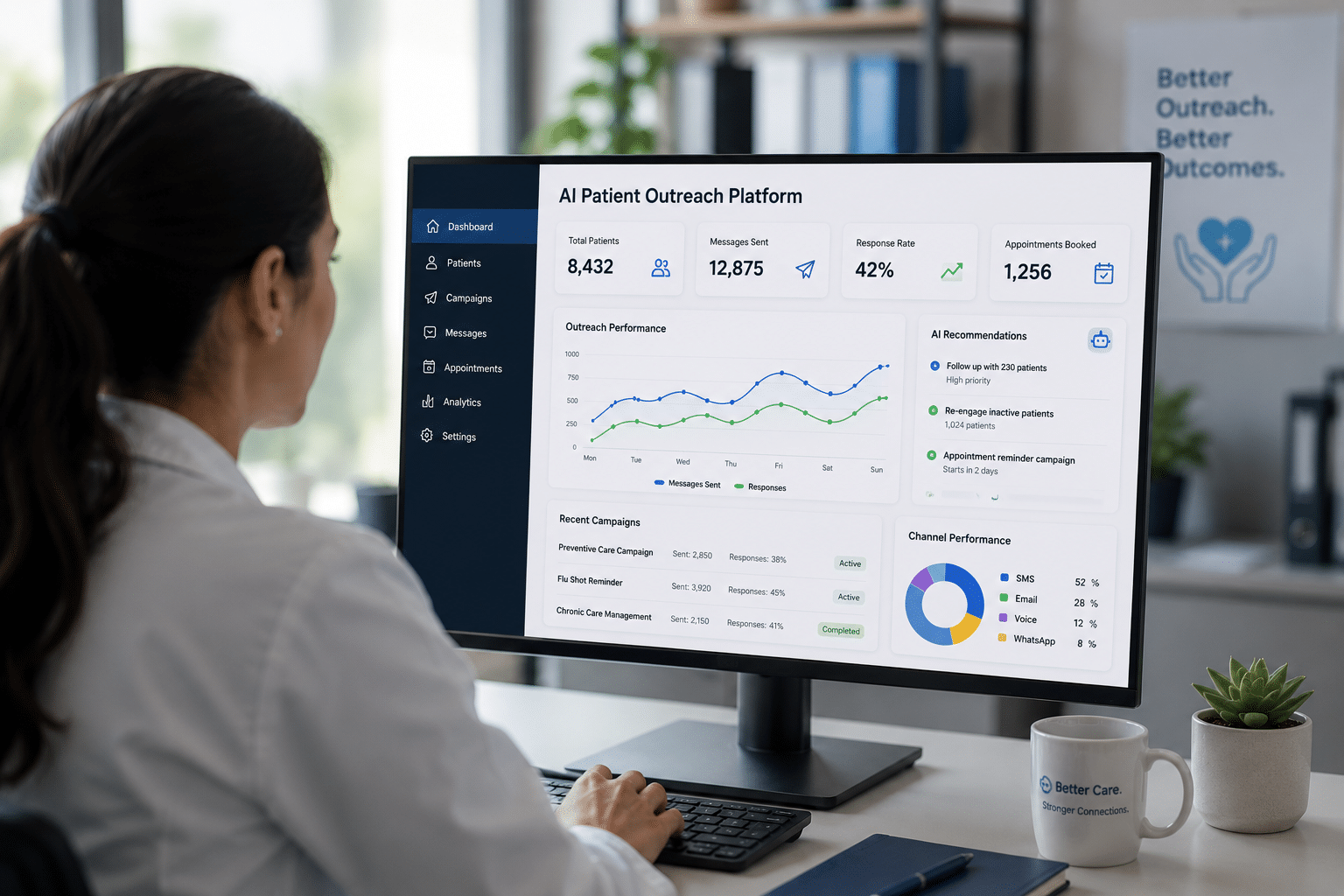
Administrative Automation: handling the 30-40% of call volume related to simple scheduling and FAQs.
Clinical Triage: acting as a digital front door to direct patients to the right level of care.
Mental Health Support: providing 24/7 empathetic conversational partners.
As we move toward 2026, the integration of generative AI is making these interactions indistinguishable from human chat in many contexts.
What is Conversational AI Technology in Healthcare?
To implement this correctly, we must look under the hood. What separates a basic chatbot from true conversational AI?
Natural Language Processing (NLP) in Medical Contexts
At the core lies Natural Language Processing (NLP). In a medical context, NLP is incredibly high-stakes. The AI must understand medical ontology (SNOMED-CT, ICD-10 codes) and colloquialisms. If a patient says, “My sugar is low,” the AI must map that to hypoglycemia immediately.
Machine Learning Models vs. Rule-Based Systems
Rule-Based Chatbots: Follow a decision tree. Safe, but limited.
Conversational AI (GenAI): Uses deep learning to generate responses. It learns from vast datasets of medical literature and patient interactions to construct answers dynamically.
How ChatGPT and LLMs Change the Game
ChatGPT for healthcare represents a leap forward because of its ability to summarize and generate text. An LLM can digest a 50-page patient history and generate a concise summary for a doctor in seconds. It can translate complex medical jargon into 5th-grade reading level instructions for a patient. This ability to “bridge the gap” in understanding is where the true value lies.
Use Cases for Conversational AI in Healthcare
The applications of this technology are vast. We categorize them into three pillars: Patient, Provider, and Administration.
1. Patient-Facing Applications
Symptom Checkers and Triage Patients often struggle to articulate what’s wrong. An AI assistant can ask probing questions—“How long have you had the fever? Is it accompanied by a rash?”—and assess urgency. This is the evolution of AI in healthcare mobile app development, moving from static forms to interactive diagnostic aids.
Appointment Scheduling and Reminders Missed appointments cost the US healthcare system billions. AI voice agents can call or text patients to confirm slots, and if a patient needs to reschedule, the AI handles the negotiation of times without human intervention. This is a critical feature for any appointment scheduling app for healthcare providers.
Mental Health Chatbots The demand for mental health services far outstrips supply. AI chatbots offer immediate, judgment-free support using CBT (Cognitive Behavioral Therapy) techniques. For startups exploring mental health app development, conversational AI is the core differentiator.
Medication Adherence “Did I take my pill?” AI assistants can send reminders and answer questions about side effects (e.g., “Can I take this with milk?”), significantly improving patient outcomes with custom healthcare apps.
2. Provider-Facing Applications
Clinical Documentation Assistance Doctors spend nearly two hours on paperwork for every hour of patient care. Ambient AI scribes can listen to the patient visit (with consent) and auto-generate SOAP notes, allowing the physician to focus on the patient, not the screen.
Medical Coding Suggestions AI can analyze clinical notes and suggest appropriate billing codes, reducing claim denials.
3. Administrative Applications
Insurance Verification and Onboarding Front-desk staff often spend hours verifying eligibility. Conversational AI agents can interface with payer portals to verify coverage in real-time while chatting with the patient during onboarding.
ChatGPT for Healthcare: Opportunities and Challenges
Integrating Chat GPT healthcare solutions brings immense power, but also significant responsibility.
GPT-4 Capabilities in Medicine
GPT-4 has passed the US Medical Licensing Exam (USMLE), demonstrating clinical reasoning. It excels at tasks like:
Summarizing patient discharge notes.
Drafting appeal letters for insurance denials.
Answering general wellness questions.
The Hallucination Problem
LLMs can “hallucinate”—confidently stating facts that are wrong. In healthcare, a hallucination can be fatal. AI development services must implement “Grounding” (Retrieval Augmented Generation) to ensure the AI only answers based on vetted medical sources, not just its training data.
HIPAA Compliance with ChatGPT
You cannot simply use the public version of ChatGPT for patient data. To build HIPAA compliant healthcare app development, you must use enterprise environments (like Azure OpenAI) where data is encrypted, not used to train the public model, and covered by a Business Associate Agreement (BAA).
Building HIPAA-Compliant Conversational AI
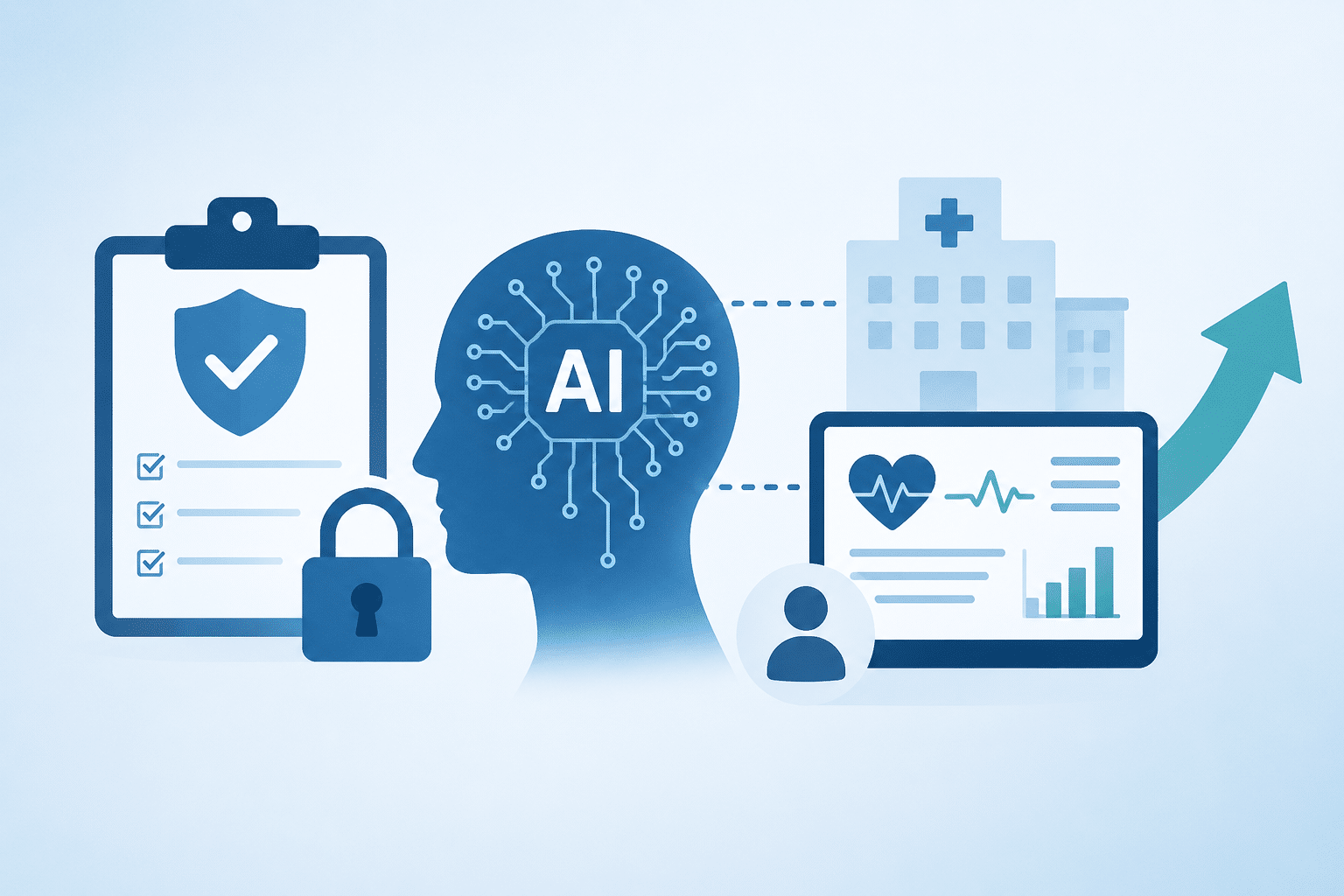
Security is the foundation of trust. Without it, your AI initiative will fail.
Architecture for Secure AI
A secure architecture isolates Patient Health Information (PHI). When a user asks a question, the system should de-identify the data before sending it to the LLM for processing, or use a private instance where data retention is turned off.
Essential Security Measures
Data Encryption: All data in transit and at rest must be encrypted.
Access Control: strict role-based access to the AI logs.
Audit Trails: Every conversation must be logged (securely) to trace how the AI arrived at a specific response.
For a deeper dive into security protocols, refer to our guide on how to build secure healthcare apps that pass HIPAA audits.
Healthcare AI Consulting: Implementation Roadmap
Implementing conversational AI is not a plug-and-play project. It requires a strategic roadmap.
Phase 1: Feasibility & Use Case Definition
Don’t boil the ocean. Start with a high-impact, low-risk use case, such as automating FAQ responses or appointment rescheduling.
Phase 2: Compliance Planning
Before writing code, establish your compliance framework. Consult with legal experts and your AI development company to draft the necessary BAAs.
Phase 3: Model Selection & Customization
Will you use GPT-4, Claude, or a specialized medical model like Med-PaLM 2? This decision depends on your budget and accuracy requirements.
Phase 4: Integration
The AI must talk to your EHR. Whether you are using a healthcare CRM app or a custom EMR, integration via HL7/FHIR standards is critical.
Phase 5: Testing & Validation
Testing in healthcare goes beyond bug fixing. It involves “Red Teaming”—trying to trick the AI into giving bad advice—to ensure safety guardrails hold up.
Taction’s Approach
At Taction Software, we view custom healthcare IT solutions as a partnership. We guide clients through every step, from healthcare mobile app development in 6 steps to advanced AI integration.
Technology Stack for Healthcare Conversational AI
Building a robust system requires a modern stack.
LLMs: Azure OpenAI (GPT-4) for compliance; open-source models (Llama 3) for on-premise control.
Orchestration: LangChain or Microsoft Semantic Kernel to manage the flow of conversation.
Vector Databases: Pinecone or Weaviate to store medical knowledge bases for Retrieval Augmented Generation (RAG).
Frontend: Whether it’s iOS, Android, or Cross-Platform, the interface must be seamless. (See: Healthcare mobile app development: iOS vs Android).
ROI and Business Case for Conversational AI
Why invest in AI development services? The numbers speak for themselves.
Cost Savings: Automating administrative tasks can reduce operational costs by up to 30%.
Patient Retention: 24/7 availability prevents patients from leaking to competitors.
Scalability: AI can handle 1,000 concurrent patient inquiries during flu season; a call center cannot.
For small practices, these efficiencies are vital. See our insights on custom healthcare app development for small clinics.
Future Trends in Healthcare Conversational AI
The technology is moving fast.
Multimodal AI: Future apps will allow patients to upload a photo of a skin rash (see: holistic health app development) and have the AI analyze it visually while discussing symptoms.
Predictive Health: AI won’t just react; it will reach out. “I noticed your step count is down and your heart rate is up. Should we schedule a check-up?”
Voice Integration: As noted in New York healthcare app development trends 2026, voice-first interfaces for the elderly will become standard.
Conclusion & Getting Started
Conversational AI is not just a trend; it is the new interface of care. It bridges the gap between the complex data of medicine and the human need for understanding. However, the path to implementation is paved with technical and regulatory challenges.
To succeed, you need a partner who understands both the code and the clinic. Whether you need healthcare mobile app development services or specialized AI healthcare consulting, the time to start is now.
Ready to transform your patient experience? Explore Taction Software’s Custom Healthcare IT Solutions and let’s build the future of healthcare conversation together.