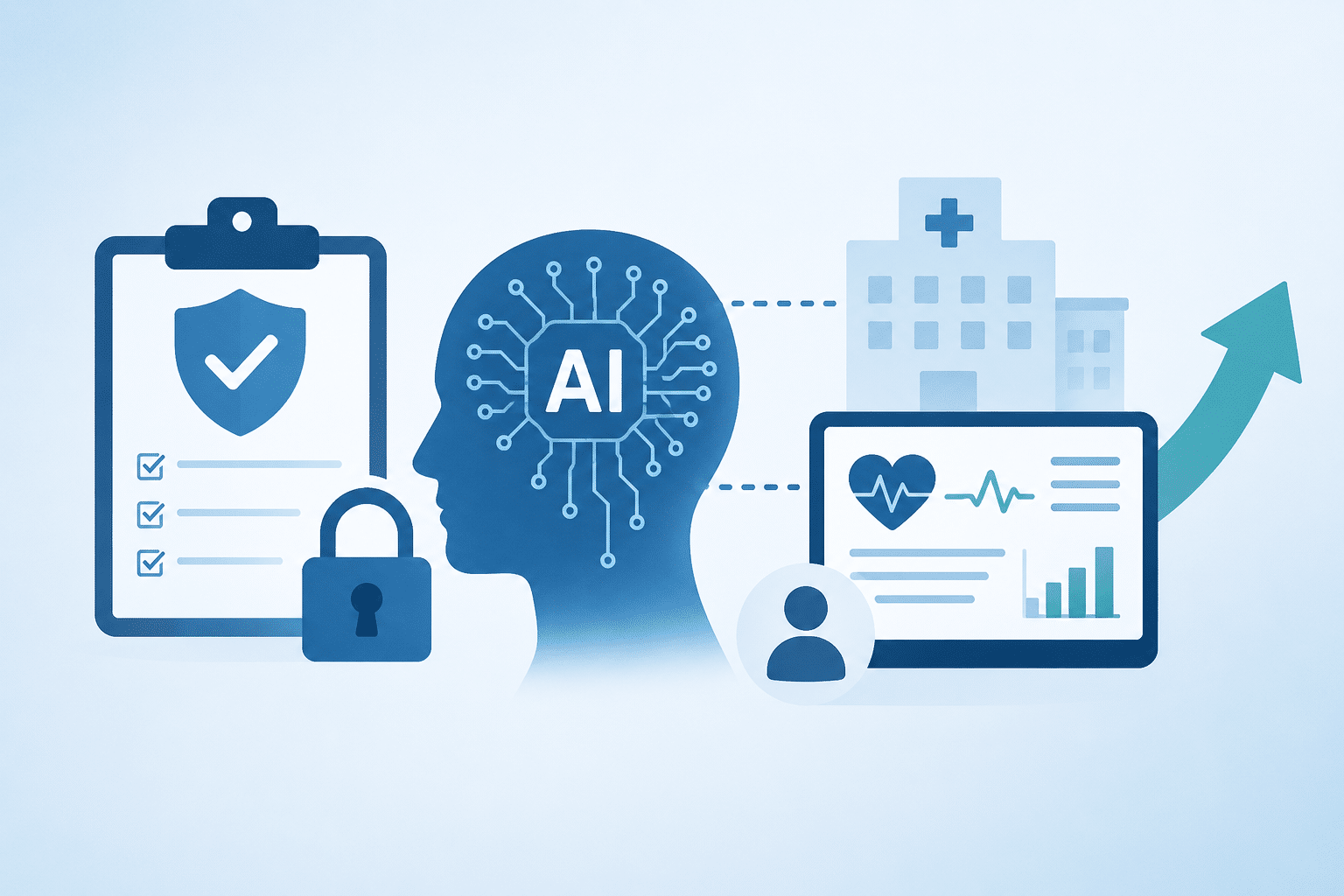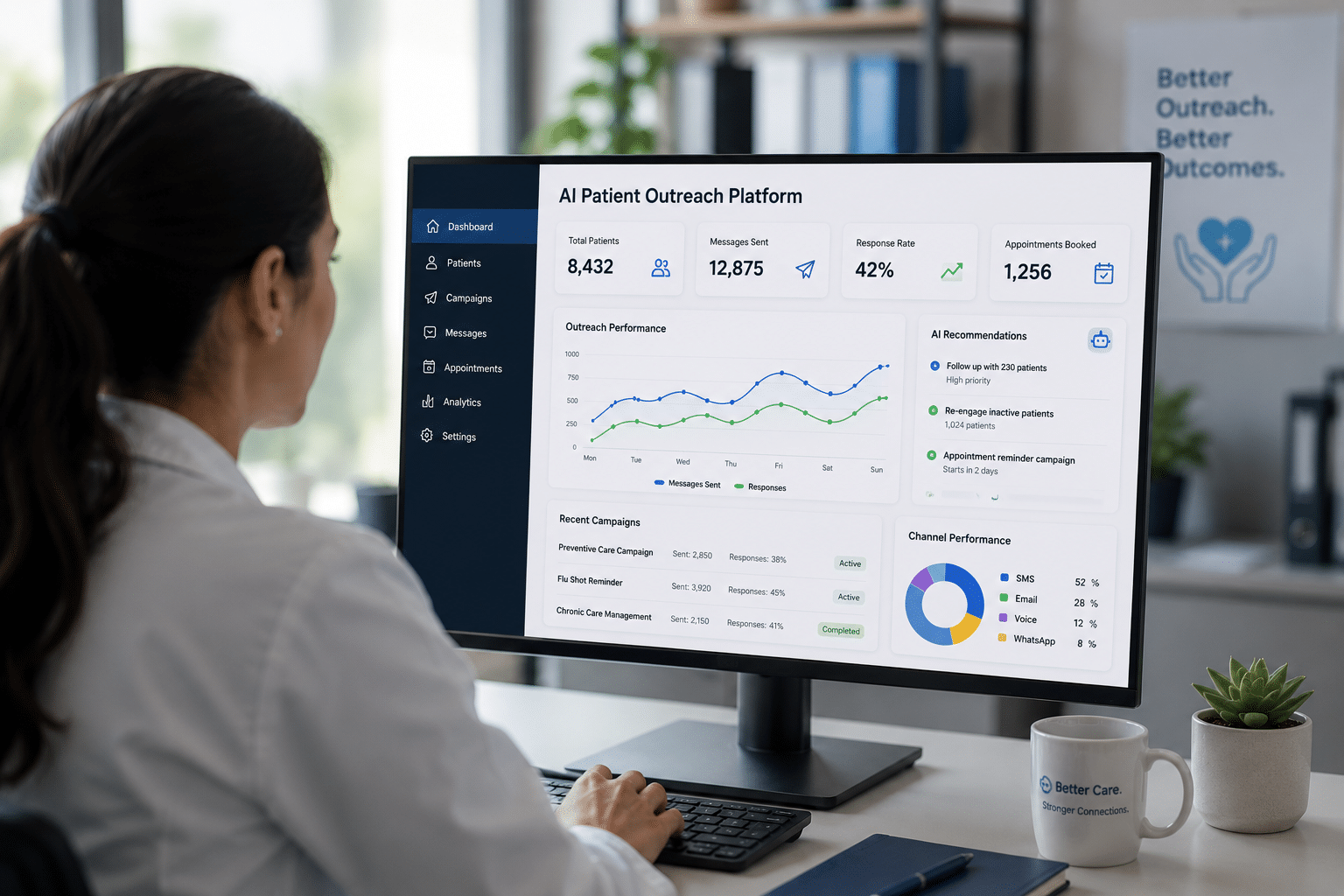
The telehealth industry has experienced explosive growth, with the market projected to reach $636.38 billion by 2028. However, this rapid expansion brings heightened scrutiny around healthcare data security and regulatory compliance. For healthcare organizations developing telehealth applications, HIPAA compliance isn’t optional—it’s a fundamental requirement that protects patient privacy and shields organizations from devastating penalties ranging from $100 to $50,000 per violation.
Ready to build a HIPAA-compliant telehealth platform? Partner with Taction Software's healthcare specialists to accelerate development while ensuring comprehensive security and regulatory compliance.
At Taction Software, we’ve spent over 20 years specializing in healthcare technology, serving 785+ clients with HIPAA-compliant solutions. Healthcare isn’t just one of our service areas—it’s our core expertise. This comprehensive guide explores the critical security and compliance requirements for telehealth app development, drawing from our extensive experience building secure healthcare applications that meet regulatory standards across multiple jurisdictions.
Understanding HIPAA Compliance for Telehealth Applications
The Health Insurance Portability and Accountability Act (HIPAA) establishes national standards for protecting sensitive patient health information. For telehealth applications, compliance extends beyond basic data protection to encompass secure communications, proper access controls, and comprehensive audit trails.
What Qualifies as Protected Health Information (PHI)?
Protected Health Information includes any individually identifiable health information transmitted or maintained in electronic form. In telehealth applications, this encompasses:
- Patient demographic information (names, addresses, dates of birth)
- Medical records and treatment histories
- Prescription information and medication lists
- Insurance and billing details
- Video consultation recordings
- Chat transcripts between patients and providers
- Diagnostic images and test results
- Device data from remote patient monitoring systems
Understanding what constitutes PHI is the foundation of compliance. Every feature in your telehealth app development project must be designed with PHI protection as a primary concern.
The Three Pillars of HIPAA: Administrative, Physical, and Technical Safeguards
HIPAA compliance rests on three fundamental categories of safeguards, each addressing different aspects of data protection.
Administrative Safeguards: Policies and Procedures
Administrative safeguards form the policy framework that governs how your organization handles PHI. These requirements include:
Security Management Process: Implement documented policies for identifying risks to electronic PHI (ePHI), protecting against threats, ensuring compliance, and establishing workforce accountability. This includes regular risk assessments that evaluate vulnerabilities in your telehealth platform.
Workforce Training and Management: Every team member with access to PHI must receive comprehensive training on HIPAA regulations, security procedures, and incident response protocols. At Taction Software, we integrate compliance training into our development lifecycle, ensuring every developer working on healthcare app development projects understands their responsibilities.
Access Management: Implement role-based access controls (RBAC) that ensure workforce members only access PHI necessary for their job functions. This principle of minimum necessary access reduces exposure risk and simplifies compliance auditing.
Contingency Planning: Develop and maintain data backup plans, disaster recovery procedures, and emergency mode operation protocols. Your telehealth application must include automated backup systems that preserve data integrity while maintaining encryption standards.
Business Associate Agreements: Any third-party vendor that handles PHI on your behalf must sign a Business Associate Agreement (BAA). This includes cloud hosting providers, analytics services, payment processors, and development partners. We’ll explore BAAs in greater depth later in this guide.
Physical Safeguards: Protecting Infrastructure
While telehealth applications operate digitally, the physical infrastructure hosting these systems requires protection:
Facility Access Controls: Implement procedures to limit physical access to systems containing ePHI. This includes secure data centers, restricted server rooms, and controlled access to workstations where developers and administrators can access production environments.
Workstation Security: Establish policies for workstation use that prevent unauthorized PHI access. For mHealth app development teams, this means secure development environments, encrypted laptops, and clear procedures for remote work scenarios.
Device and Media Controls: Create procedures for the disposal and reuse of electronic media containing ePHI. When decommissioning servers or development devices, data must be securely wiped using methods that prevent recovery.
Technical Safeguards: The Technology Foundation
Technical safeguards represent the core security features built into your telehealth application:
Access Controls: Implement unique user identification, emergency access procedures, automatic logoff after inactivity, and encryption/decryption capabilities. Every user session in your telemedicine app development must be individually tracked and secured.
Audit Controls: Deploy mechanisms to record and examine system activity involving ePHI. Comprehensive audit logging captures who accessed what information, when, and what actions they performed. These logs must be tamper-proof and retained according to regulatory requirements.
Integrity Controls: Implement safeguards to ensure ePHI isn’t improperly altered or destroyed. This includes version control systems, checksums, and digital signatures that verify data authenticity.
Transmission Security: Protect ePHI transmitted over electronic networks through encryption and integrity controls. For telehealth applications, this means end-to-end encryption for all communications channels.
End-to-End Encryption: The Foundation of Secure Telehealth
Encryption transforms readable data into coded format that only authorized parties can decrypt. For telehealth applications, encryption must protect data both at rest (stored) and in transit (transmitted).
Encryption Standards and Protocols
AES-256 Encryption: The Advanced Encryption Standard with 256-bit keys represents the gold standard for encrypting stored data. All patient records, consultation notes, and uploaded documents in your telehealth platform should use AES-256 encryption.
TLS 1.3 for Data in Transit: Transport Layer Security (TLS) version 1.3 provides secure communication channels for data transmitted between clients and servers. Every API endpoint in your HIPAA compliant app development must enforce TLS 1.3 or higher, rejecting connections using outdated protocols.
End-to-End Encryption for Video Consultations: Unlike standard encryption that protects data between client and server, end-to-end encryption ensures only the communicating parties can decrypt content. For telehealth video consultations, this means patient-provider conversations remain private even from your platform infrastructure.
Implementing Secure Video Conferencing
Video consultations represent the core functionality of most telehealth applications, making secure video conferencing for healthcare a critical requirement:
WebRTC with DTLS-SRTP: Web Real-Time Communication (WebRTC) with Datagram Transport Layer Security-Secure Real-time Transport Protocol provides encrypted peer-to-peer video connections. This technology ensures video streams are encrypted end-to-end without compromising quality.
TURN Server Security: Traversal Using Relays around NAT (TURN) servers help establish connections when direct peer-to-peer communication fails. These servers must be secured, located in HIPAA-compliant data centers, and configured to prevent unauthorized relay usage.
Recording and Archival: When telehealth platforms offer consultation recording features, encrypted storage becomes essential. Recordings must be encrypted at rest, with access controls ensuring only authorized providers and patients can retrieve them.
At Taction Software, our proprietary TURBO framework accelerates HIPAA compliant software development by providing pre-built, security-audited components for video conferencing, data encryption, and access management. This approach reduces development time while ensuring every security control meets regulatory standards.
Don't risk penalties up to $50,000 per violation. Let Taction Software's TURBO framework deliver your secure telehealth app with proven compliance across all regulatory requirements.
Business Associate Agreements: Legal Framework for Compliance
The Business Associate Agreement (BAA) creates a legal contract between covered entities (healthcare providers) and business associates (vendors handling PHI). Understanding BAA requirements is essential for any organization developing or operating telehealth applications.
What Must a BAA Include?
Permitted Uses and Disclosures: The BAA must clearly define how the business associate may use and disclose PHI. For telehealth platforms, this typically includes providing platform services, improving application functionality based on aggregated data, and complying with legal requirements.
Safeguard Obligations: Business associates must implement appropriate safeguards to prevent unauthorized PHI use or disclosure. This section should reference specific security measures like encryption standards, access controls, and monitoring systems.
Subcontractor Requirements: If your telehealth platform uses additional vendors (cloud hosting, analytics, payment processing), the BAA must require similar agreements with these subcontractors. At Taction Software, we maintain BAAs with all infrastructure providers supporting our healthcare mobile app development projects.
Incident Reporting: The agreement must specify timelines for reporting security incidents and breaches. Industry standards typically require notification within 24-48 hours of discovery, allowing covered entities to fulfill their own reporting obligations.
Audit Rights: Covered entities must have the right to audit business associate compliance. The BAA should define audit procedures, frequency, and the business associate’s obligation to make records available.
Termination Provisions: The agreement must outline conditions for termination and procedures for returning or destroying PHI upon contract conclusion.
BAA Negotiation Strategies
When engaging development partners for your telehealth application, BAA terms significantly impact project success:
Insurance Requirements: Verify your development partner carries adequate cyber liability insurance. Given penalty structures reaching $50,000 per violation, comprehensive coverage protects both parties from breach-related financial damage.
Indemnification Clauses: Carefully review which party bears responsibility for different types of breaches. Development partners should typically assume liability for security flaws in their code, while covered entities retain responsibility for operational security and staff training.
Data Ownership and Portability: Ensure the BAA clearly establishes that covered entities own all patient data, with provisions for data export in standard formats should you transition to different technology partners.
Comprehensive Audit Logging and Access Controls
Audit trails provide the accountability mechanism that makes HIPAA compliance verifiable. Without detailed logging, demonstrating compliance becomes impossible during regulatory audits or breach investigations.
What to Log in Telehealth Applications
User Authentication Events: Record every login attempt (successful and failed), including usernames, timestamps, IP addresses, and device identifiers. Failed login attempts may indicate unauthorized access attempts requiring security team investigation.
PHI Access Events: Log every instance where users view, modify, or delete patient information. These logs should capture the specific data accessed, the user performing the action, the timestamp, and the business justification when available.
Administrative Actions: Record changes to user permissions, system configurations, and security settings. These events represent elevated risk activities requiring additional scrutiny during compliance audits.
Data Export and Sharing: Track every instance where PHI leaves your platform, whether through data exports, shared consultation summaries, or integration with other healthcare systems via FHIR and HL7 standards.
System Exceptions and Errors: Log application errors that might indicate security vulnerabilities or attempted attacks. Unusual patterns in error logs often provide early warning of security incidents.
Audit Log Security and Retention
Audit logs themselves contain sensitive information and require protection:
Tamper-Proof Storage: Implement write-once storage systems or cryptographic hashing to prevent log modification. Any attempt to alter historical audit records should be detectable through integrity verification.
Retention Requirements: HIPAA requires retaining audit logs for at least six years. Some state regulations mandate longer retention periods. Design your logging infrastructure with sufficient storage capacity and archival procedures to meet these requirements.
Access Controls for Logs: Restrict audit log access to security administrators and compliance officers. Implement separate authentication for log access, preventing users from covering their tracks by modifying logs.
Automated Analysis: Deploy security information and event management (SIEM) systems that analyze logs in real-time, detecting anomalous access patterns that might indicate unauthorized activity or compromised accounts.
Multi-State Compliance: Beyond Federal HIPAA
While HIPAA establishes federal minimum standards, many states impose additional healthcare privacy requirements. Telehealth applications serving patients across multiple states must comply with the most stringent applicable regulations.
California’s Enhanced Privacy Requirements
California maintains particularly strong healthcare privacy protections through multiple laws:
Confidentiality of Medical Information Act (CMIA): California’s CMIA imposes stricter requirements than HIPAA for obtaining patient authorization before disclosing medical information. Telehealth applications serving California patients must implement granular consent management, allowing patients to authorize specific disclosures rather than broad data sharing.
California Consumer Privacy Act (CCPA): While HIPAA-covered entities receive partial exemptions from CCPA, many telehealth applications collect information beyond traditional PHI. CCPA requires detailed privacy notices, provides consumers with deletion rights, and prohibits discriminating against users who exercise their privacy rights.
Data Breach Notification: California law requires notifying affected individuals of healthcare data breaches without unreasonable delay. This stricter standard eliminates the 60-day notification window HIPAA allows, requiring more aggressive incident response procedures.
State-Specific Telehealth Regulations
Beyond privacy laws, states regulate telehealth practice itself:
Provider Licensing: Providers must typically hold licenses in the states where patients are located during consultations. Your telemedicine app development should verify provider licensure for patient locations before enabling consultations.
Informed Consent Requirements: Many states mandate specific disclosures about telehealth limitations, emergency procedures, and prescription policies. Your platform must present and document these consents before initial consultations.
Prescription Restrictions: States vary significantly in telemedicine prescription regulations, particularly for controlled substances. Applications must enforce location-specific prescription rules, preventing providers from prescribing medications not permitted via telehealth in particular jurisdictions.
At Taction Software, our experience developing healthcare applications across all 50 states has built comprehensive understanding of these regulatory variations. Our TURBO framework includes configurable compliance modules that adapt to jurisdiction-specific requirements, ensuring your telehealth platform maintains compliance as it scales nationally.
Transform your telehealth vision into reality with 20+ years of healthcare expertise. Taction Software ensures your application meets HIPAA, FDA, and multi-state compliance standards.
FDA Regulations for Medical Device Software
Certain telehealth applications fall under FDA regulation as medical devices, triggering additional compliance requirements beyond HIPAA.
When Does Your Telehealth App Qualify as a Medical Device?
The FDA defines medical devices as instruments intended to diagnose, cure, mitigate, treat, or prevent disease. Telehealth applications cross into medical device territory when they:
Analyze Patient Data for Diagnostic Purposes: Applications that process patient-provided information (symptoms, vital signs, images) and generate diagnostic suggestions or treatment recommendations typically qualify as medical devices requiring FDA oversight.
Control or Influence Medical Hardware: Apps that connect to medical devices like continuous glucose monitors, blood pressure cuffs, or cardiac monitors may qualify as medical device accessories requiring FDA review.
Make Treatment Decisions: Applications using algorithms to recommend medication dosages, treatment protocols, or intervention timing typically require FDA clearance or approval.
FDA Software as a Medical Device (SaMD) Framework
The FDA applies risk-based regulation to software medical devices:
Class I (Low Risk): General wellness applications that help users maintain healthy lifestyles without making medical claims typically face minimal FDA requirements beyond registration and listing.
Class II (Moderate Risk): Most diagnostic or monitoring applications fall into Class II, requiring 510(k) premarket notification demonstrating substantial equivalence to existing cleared devices. This process involves comprehensive documentation of software development practices, clinical validation, and cybersecurity measures.
Class III (High Risk): Applications that support life-sustaining functions or present significant injury risk require Premarket Approval (PMA), the FDA’s most rigorous review process involving clinical trials and extensive safety data.
FDA Cybersecurity Requirements
The FDA increasingly emphasizes cybersecurity in medical device regulation:
Cybersecurity Bill of Materials: Document all software components, including third-party libraries and frameworks. This transparency allows identifying vulnerabilities when security flaws are discovered in widely-used components.
Secure Software Development Lifecycle: Implement formal development processes that integrate security throughout design, implementation, testing, and maintenance phases. The FDA expects development partners to follow recognized standards like IEC 62304 for medical device software lifecycle processes.
Post-Market Surveillance: Establish procedures for monitoring deployed applications, identifying security vulnerabilities, and distributing updates. The FDA requires medical device manufacturers to address cybersecurity vulnerabilities through timely patches.
Many healthcare organizations partner with specialized developers like Taction Software to navigate FDA requirements. Our team has extensive experience with FDA-approved telehealth software development, including applications for teledermatology, chronic disease management, and remote patient monitoring.
GDPR Compliance for International Telehealth Expansion
Healthcare organizations expanding telehealth services internationally must comply with the European Union’s General Data Protection Regulation (GDPR), which imposes strict requirements for processing personal data of EU residents.
Key GDPR Requirements for Telehealth
Lawful Basis for Processing: GDPR requires establishing a lawful basis before processing personal data. For healthcare applications, this typically involves obtaining explicit consent or demonstrating necessity for medical treatment. Unlike HIPAA’s relatively broad treatment permissions, GDPR requires granular consent for different processing activities.
Data Minimization: Collect and process only personal data necessary for specified purposes. Telehealth applications must carefully evaluate which data points are truly essential versus convenient, eliminating unnecessary data collection.
Right to Access and Portability: Patients must be able to access their data in structured, commonly-used formats and transfer it to competing services. Your mHealth solutions must include data export functionality providing comprehensive patient records in standardized formats like FHIR.
Right to Erasure: Under certain conditions, individuals can request data deletion. Healthcare applications must balance this right against medical record retention requirements, typically implementing pseudonymization rather than complete deletion for records with ongoing clinical relevance.
Data Protection Impact Assessments: GDPR requires formal assessments for high-risk processing activities. Telehealth applications processing sensitive health data at scale must conduct DPIAs documenting risks and mitigation measures.
Transatlantic Data Transfers
Transferring patient data between the United States and European Union requires specific legal mechanisms:
Standard Contractual Clauses: The European Commission provides contractual templates establishing data protection obligations for international transfers. These clauses must be incorporated into agreements with any US-based service providers processing EU patient data.
Supplementary Measures: Following the Schrems II decision, standard clauses alone may be insufficient. Organizations must implement additional technical measures like encryption, access controls, and data minimization to ensure EU data protection standards are maintained.
Data Localization Considerations: Some healthcare organizations opt for data localization, storing EU patient data exclusively in European data centers. While GDPR doesn’t mandate localization, this approach simplifies compliance and addresses regulatory concerns about US government surveillance.
Taction’s TURBO Framework: Accelerating Compliant Development
At Taction Software, we’ve developed our proprietary TURBO framework specifically to accelerate HIPAA-compliant healthcare application development while maintaining the highest security standards. After 20+ years and 785+ healthcare clients, we’ve refined an approach that balances speed, security, and regulatory compliance.
Pre-Built Compliance Components
Our TURBO framework includes security-audited, reusable components addressing common telehealth requirements:
Authentication and Authorization Module: Pre-built multi-factor authentication, role-based access controls, and session management that meet HIPAA technical safeguard requirements. This module reduces authentication development time by 60% while ensuring consistent security across all applications.
Encryption Services: Standardized encryption implementations for data at rest and in transit, eliminating the risk of cryptographic errors that commonly plague custom implementations. Our encryption module has undergone third-party security audits, providing assurance to healthcare organizations and their regulators.
Audit Logging System: Comprehensive, tamper-proof logging infrastructure that captures all required events with standardized formatting. This system integrates with popular SIEM platforms and includes pre-built compliance reports for HIPAA audits.
Consent Management: Granular consent tracking supporting HIPAA, GDPR, CCPA, and state-specific requirements. The consent module maintains detailed records of patient authorizations, supporting both broad treatment consent and specific data sharing permissions.
Rapid Prototyping and Iteration
The TURBO framework enables rapid development cycles without sacrificing security:
Configuration Over Customization: Rather than building features from scratch, developers configure pre-built components to meet specific requirements. This approach reduces development time by 40-50% compared to traditional custom development.
Automated Security Testing: Integrated security scanning tools automatically detect common vulnerabilities during development. Every code commit undergoes static analysis, dependency checking, and configuration validation against security best practices.
Compliance-Ready Architecture: Applications built on TURBO inherit architecture patterns that facilitate compliance. Separation of PHI from operational data, comprehensive audit trails, and encryption by default reduce the compliance burden during security assessments.
Post-Deployment Support and Maintenance
HIPAA compliance isn’t a one-time achievement but an ongoing obligation:
Security Patch Management: Our team monitors security advisories for all framework components and third-party dependencies. When vulnerabilities are discovered, we develop, test, and distribute patches to all applications built on TURBO.
Compliance Updates: As regulations evolve, we update TURBO framework components to maintain compliance. When California strengthened CMIA requirements or the FDA updated medical device cybersecurity guidance, our clients benefited from framework updates addressing new requirements.
24/7 Incident Response: Security incidents require immediate action. Our team provides round-the-clock support for security incidents, helping healthcare organizations contain breaches, conduct forensic analysis, and fulfill regulatory notification obligations.
Healthcare organizations choosing Taction Software as their development partner gain not just a software vendor but a long-term compliance ally. Our team includes certified HIPAA compliance specialists who stay current with evolving regulations and security threats.
The True Cost of Non-Compliance
Understanding HIPAA penalty structures helps healthcare organizations prioritize compliance investments:
HIPAA Violation Penalty Tiers
The Department of Health and Human Services enforces HIPAA violations through a tiered penalty structure based on culpability:
Tier 1 – Unknowing Violations: $100 to $50,000 per violation, with an annual maximum of $25,000 for repeat violations of the same provision. This tier applies when organizations were unaware and could not have known about the violation despite reasonable diligence.
Tier 2 – Reasonable Cause: $1,000 to $50,000 per violation, with an annual maximum of $100,000. This tier applies when the violation was due to reasonable cause and not willful neglect.
Tier 3 – Willful Neglect (Corrected): $10,000 to $50,000 per violation, with an annual maximum of $250,000. This category applies when violations stem from willful neglect but are corrected within 30 days.
Tier 4 – Willful Neglect (Not Corrected): $50,000 per violation, with an annual maximum of $1.5 million. The most severe penalties apply to willful neglect violations not corrected within 30 days of discovery.
Real-World HIPAA Settlements
Recent enforcement actions illustrate the financial impact of compliance failures:
A major hospital system paid $16 million to settle HIPAA violations after ransomware attacks exposed over 3 million patient records. Investigators found the organization failed to conduct comprehensive risk analyses and lacked adequate incident response procedures.
A telehealth provider faced $4.3 million in penalties after a hacking incident exposed patient data. The investigation revealed inadequate encryption, missing audit controls, and failure to implement security updates promptly.
A healthcare technology vendor paid $3 million after a compliance review identified systematic failures in business associate agreement management, access controls, and audit logging.
These settlements share common themes: organizations that view compliance as a checklist exercise rather than an ongoing security program face the most severe consequences.
Indirect Costs of Breaches
Financial penalties represent only a portion of breach costs:
Legal and Forensic Expenses: Investigating breaches, engaging cybersecurity firms, and managing legal proceedings typically cost millions of dollars even for moderate-sized incidents.
Notification Costs: HIPAA requires notifying affected individuals, the media (for breaches affecting 500+ people), and regulators. Notification expenses, credit monitoring services, and call center operations add substantial costs.
Reputational Damage: Healthcare organizations breached patient trust may struggle to retain existing patients and attract new ones. Quantifying reputational damage is difficult, but patient attrition following high-profile breaches significantly impacts revenue.
Insurance Premium Increases: Following security incidents, cyber liability insurance premiums often increase dramatically or coverage becomes unavailable at reasonable rates.
Investing in comprehensive HIPAA compliance from the outset proves far more cost-effective than remediating violations or recovering from breaches. Organizations that partner with experienced HIPAA SaaS app development specialists position themselves to avoid these costly scenarios.
Launch your telehealth application faster with Taction Software's pre-built compliance modules. Our TURBO framework reduces development time by 40-50% while maintaining HIPAA security standards.
Advanced Telehealth Security Features
Beyond basic compliance requirements, leading telehealth platforms implement additional security features that enhance patient trust and reduce risk:
Zero-Trust Architecture
Traditional network security assumes users inside the network perimeter are trustworthy. Zero-trust architecture eliminates this assumption, requiring verification for every access request regardless of source:
Continuous Authentication: Rather than authenticating once per session, zero-trust systems continuously verify user identity through behavioral biometrics, device fingerprinting, and activity patterns. Anomalous behavior triggers re-authentication or session termination.
Microsegmentation: Divide your telehealth application into isolated segments, preventing lateral movement if attackers compromise one component. Even with valid credentials for one system, attackers cannot automatically access other patient data repositories.
Least-Privilege Access: Grant users the minimum permissions necessary for their roles, with time-limited access to particularly sensitive functions. Providers accessing remote patient monitoring data receive access only to their own patients’ information, not the entire patient database.
Advanced Threat Detection
Modern telehealth platforms implement sophisticated monitoring to detect attacks in real-time:
Behavioral Analytics: Machine learning models establish baseline behaviors for users and systems, flagging deviations that might indicate compromised accounts or insider threats. Unusual data access patterns, download volumes, or login locations trigger security alerts.
Automated Incident Response: When threats are detected, automated systems can quarantine affected accounts, block suspicious IP addresses, and escalate alerts to security teams. This automation reduces the window between detection and response from hours to seconds.
Threat Intelligence Integration: Connect your security monitoring to threat intelligence feeds that provide real-time information about newly discovered vulnerabilities, active attack campaigns, and compromised credentials. This external data helps security teams prioritize responses to the most pressing threats.
Privacy-Enhancing Technologies
Emerging technologies enable new approaches to healthcare data protection:
Differential Privacy: When performing analytics on patient populations, differential privacy adds mathematical noise ensuring individual patients cannot be identified even if attackers access analytic results. This technology enables valuable research while protecting privacy.
Homomorphic Encryption: This advanced cryptographic technique allows performing computations on encrypted data without decrypting it. While still emerging, homomorphic encryption could enable AI-powered telehealth features that process patient data without exposing unencrypted information to algorithms.
Federated Learning: Rather than aggregating patient data centrally for machine learning, federated learning trains algorithms across distributed datasets without centralizing information. Models learn from patient data while the data itself never leaves local systems.
Building a Compliance-First Development Culture
Technology alone doesn’t ensure HIPAA compliance. Successful healthcare applications emerge from organizations that embed compliance throughout their development culture:
Security Champions Program
Designate security champions within development teams who receive advanced training on healthcare security requirements. These champions:
- Review code changes for security implications before merging
- Serve as resources when developers have security questions
- Participate in threat modeling sessions for new features
- Advocate for security priorities during sprint planning
Regular Security Training
Healthcare regulations and security threats evolve constantly. Quarterly training sessions keep development teams current:
- Case studies of recent healthcare data breaches and lessons learned
- Updates on new regulatory requirements or guidance
- Hands-on exercises practicing secure coding techniques
- Threat modeling workshops for upcoming features
Compliance Automation
Manual compliance processes don’t scale. Successful organizations automate wherever possible:
Automated Security Scanning: Integrate static application security testing (SAST) and dynamic application security testing (DAST) into continuous integration pipelines. Code changes that introduce vulnerabilities fail automated tests before reaching production.
Configuration Management: Use infrastructure-as-code approaches that define security configurations in version-controlled templates. This approach ensures consistent security across environments and provides audit trails for configuration changes.
Compliance Dashboards: Deploy real-time dashboards showing compliance status across all regulatory requirements. These dashboards help leadership understand compliance posture and identify areas needing attention.
At Taction Software, compliance-first development isn’t theoretical—it’s how we’ve successfully delivered 785+ healthcare projects. Our experience developing solutions from mental health telepsychiatry platforms to enterprise telehealth solutions has proven that embedding compliance in development culture produces more secure applications than bolting security on later.
Choosing the Right Development Partner
Healthcare organizations face a critical decision when selecting development partners for telehealth applications. The wrong choice can result in compliance violations, security breaches, and failed deployments.
Questions to Ask Prospective Partners
Healthcare Experience: How many healthcare applications has the team developed? What percentage of their work focuses on healthcare versus other industries? Developers who primarily build consumer apps or enterprise software may lack the specialized healthcare knowledge necessary for compliant telehealth platforms.
Compliance Expertise: Does the team include certified HIPAA compliance professionals? Can they explain the differences between HIPAA, GDPR, and state-specific regulations? Have they successfully navigated FDA review processes for medical device software?
Security Infrastructure: What security tools and practices does the team employ? How do they handle penetration testing and vulnerability management? What is their incident response process if security issues are discovered?
BAA Willingness: Will the partner sign a comprehensive Business Associate Agreement without excessive carve-outs or limitations? Hesitation around BAA terms often indicates insufficient cybersecurity insurance or concerns about their security practices.
Reference Clients: Can they provide references from healthcare organizations with similar telehealth requirements? Speaking with past clients reveals how partners handle challenges, communicate during difficult situations, and support applications post-launch.
The Taction Software Advantage
Taction Software brings 20+ years of healthcare-focused development experience to every engagement:
Healthcare-First Approach: Unlike generalist software companies that occasionally build healthcare applications, healthcare technology is our core business. We’ve served 785+ healthcare clients across physiotherapy apps, specialty telehealth platforms, and enterprise healthcare systems.
Multi-Jurisdiction Compliance: Our experience spans all US states plus international markets, giving us comprehensive understanding of varying regulatory requirements. When regulations change, we proactively update our frameworks and inform affected clients.
Proven Security Record: Our security practices have withstood numerous third-party audits, penetration tests, and regulatory reviews. This track record provides healthcare organizations with confidence their telehealth applications meet the highest security standards.
Transparent Partnership: We view client relationships as partnerships, not vendor transactions. Our team provides honest assessments of timelines, risks, and technical approaches rather than over-promising and under-delivering.
Long-Term Support: HIPAA compliance doesn’t end at launch. Our team provides ongoing security monitoring, compliance updates, and technical support ensuring your telehealth platform maintains compliance as regulations evolve and threats emerge.
Conclusion: Security and Compliance as Competitive Advantages
HIPAA compliance and robust security practices aren’t merely regulatory checkboxes—they’re fundamental to building telehealth applications that patients trust and healthcare organizations can confidently deploy. In an era of frequent healthcare data breaches and heightened privacy awareness, demonstrating genuine commitment to data protection differentiates leading telehealth platforms from hastily assembled alternatives.
The pathway to compliant telehealth development requires:
- Comprehensive understanding of HIPAA’s administrative, physical, and technical safeguards
- Robust encryption protecting data at rest, in transit, and during video consultations
- Properly executed Business Associate Agreements with all partners handling PHI
- Detailed audit logging capturing every interaction with patient information
- Awareness of multi-state requirements beyond federal HIPAA standards
- Navigation of FDA regulations when applications function as medical devices
- GDPR compliance for organizations serving international patient populations
- Investment in ongoing security monitoring, threat detection, and incident response
Organizations serious about telehealth success recognize these requirements as opportunities rather than obstacles. Healthcare providers that deploy secure, compliant telehealth platforms earn patient trust, avoid devastating penalties, and position themselves as leaders in digital health transformation.
For healthcare organizations embarking on telehealth development, partnering with specialized experts accelerates time-to-market while ensuring comprehensive compliance. Taction Software’s TURBO framework, healthcare-focused expertise, and proven track record provide the foundation for successful telehealth applications that meet the highest security and compliance standards.
Ready to develop a HIPAA-compliant telehealth application that prioritizes security, compliance, and patient trust? Contact Taction Software’s team of healthcare technology specialists to discuss your telehealth vision and explore how our proven frameworks can accelerate your development timeline while ensuring comprehensive regulatory compliance.
Taction Software has delivered 785+ healthcare technology solutions over 20+ years, specializing in HIPAA-compliant application development, EHR/EMR integration, and telehealth platforms. Our proprietary TURBO framework accelerates development while maintaining the highest security and compliance standards. Contact us to learn how we can support your telehealth development journey.