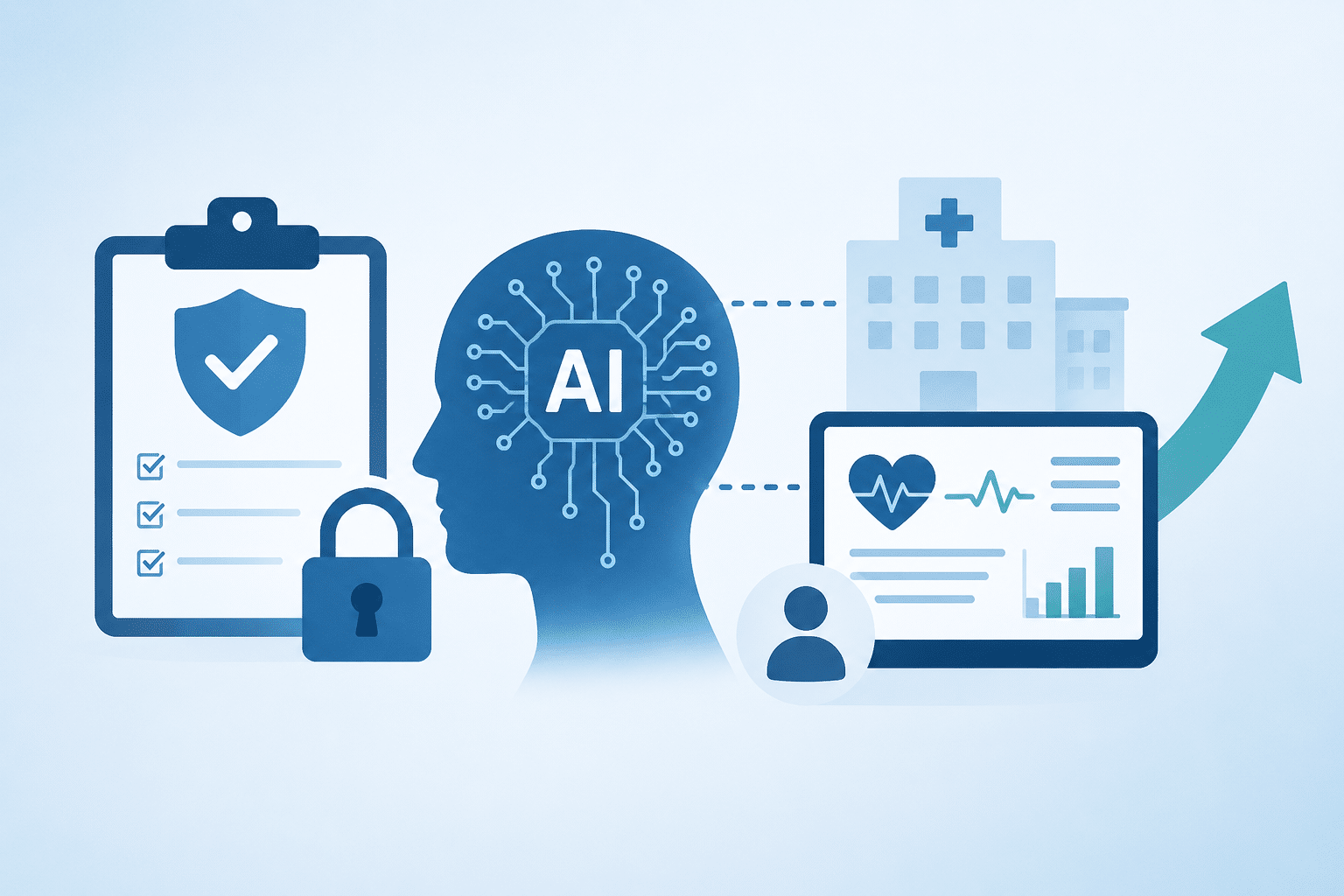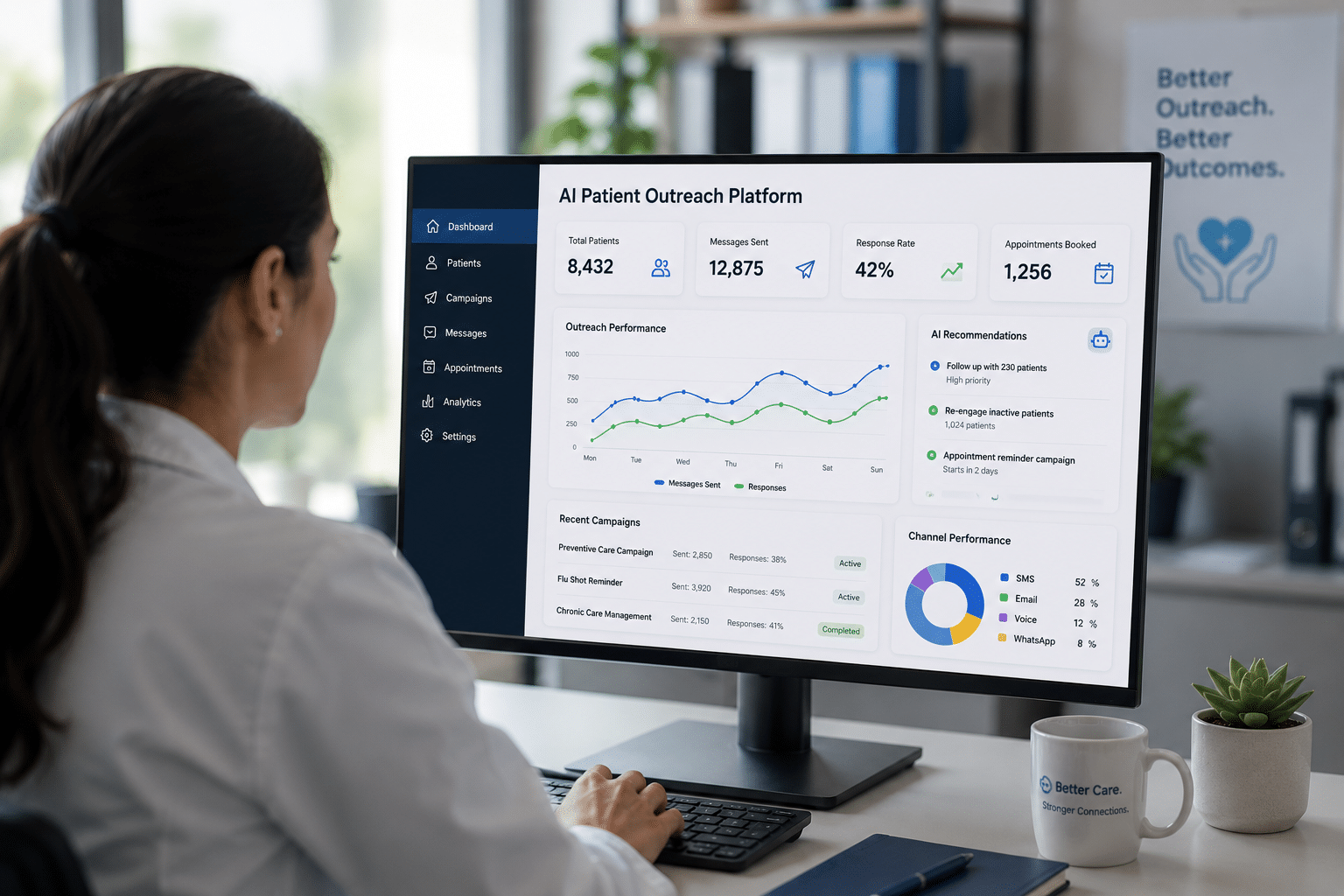
HIPAA compliant app development is the process of building mobile and web applications that meet the HIPAA Privacy, Security, and Breach Notification Rules when handling protected health information (PHI). It covers encryption, access controls, audit logging, secure hosting, BAAs with subprocessors, and operational practices that hold up under audit.
Taction Software builds HIPAA compliant iOS, Android, and web apps for digital health startups, hospitals, payers, and life sciences companies — with compliance designed into architecture, not retrofitted before launch.
Introduction
HIPAA compliance is rarely the hard part of building a healthcare app. The hard part is doing it without slowing the product down, breaking the user experience, or making the codebase impossible to maintain.
Most projects that get into trouble share the same pattern. Compliance was treated as a final-stage checklist. A penetration test surfaced gaps. A BAA review caught hosting choices that needed to be reversed. A payer or hospital partner asked for an audit log that the system was never designed to produce.
We build the other way. Compliance decisions get made in the first two weeks — hosting model, PHI data flow, identity, logging, encryption, key management — and every sprint after that ships against those decisions. The result is an app that goes live faster and survives audit without scrambling.
HIPAA Compliant App Development Services
We build HIPAA compliant apps from scratch and remediate existing apps that need to become audit-ready. Engagements typically include compliance architecture, full-stack development, security testing, and post-launch managed support.
Common situations we step into:
- A digital health startup needs a HIPAA compliant MVP that a hospital partner will actually deploy
- A provider or payer has an internal app built without HIPAA in mind and needs it remediated
- A SaaS company is moving into healthcare and needs to add PHI handling to an existing product
- A device or pharma company needs a patient-facing or clinician-facing companion app
- An existing app needs a HIPAA security risk assessment, gap analysis, and remediation plan
Core HIPAA Compliant App Development Services
HIPAA Compliant Mobile App Development
Native iOS (Swift), native Android (Kotlin), and cross-platform (React Native, Flutter) apps with secure local storage, biometric authentication, certificate pinning, and PHI-safe push notification handling.
HIPAA Compliant Web App Development
Patient portals, provider dashboards, admin consoles, and SaaS healthcare products built on React, Next.js, Angular, Node.js, .NET, Java, or Python — with SSO, role-based access, and full audit trails.
HIPAA Compliant Backend and API Development
PHI-aware REST and GraphQL APIs, FHIR R4 endpoints, OAuth 2.0 / SMART on FHIR authorization, encrypted data stores, and event logging built for HIPAA accounting-of-disclosures requirements.
HIPAA Cloud Architecture
HIPAA-eligible deployments on AWS, Azure, and Google Cloud — with BAAs, encrypted services, private networking, secrets management, and infrastructure-as-code so compliance is reproducible.
HIPAA Security Risk Assessment and Gap Analysis
Written assessment against the HIPAA Security Rule (§164.308, §164.310, §164.312), with prioritized remediation plan, evidence collection, and documentation that satisfies OCR investigation requirements.
HIPAA Remediation of Existing Apps
Bringing legacy or non-compliant apps up to HIPAA standards — encryption fixes, access control redesign, audit log implementation, hosting migration, BAA review, and policy/procedure updates.
HIPAA Penetration Testing and Vulnerability Management
Application-layer pen testing, dependency scanning, secrets scanning, and remediation tracking. Findings mapped to HIPAA controls and OWASP categories.
Telehealth and PHI-Heavy App Builds
Video, messaging, RPM, e-prescribing, and patient engagement apps where PHI flows through real-time channels — handled with HIPAA-aware media stacks and storage.
HIPAA Documentation and Audit Support
Policies, procedures, data flow diagrams, incident response playbooks, and audit evidence packages for OCR, SOC 2, HITRUST, and customer security questionnaires.
Managed Support for HIPAA Apps
Ongoing patching, dependency updates, log monitoring, annual risk assessments, BAA renewals, and quarterly compliance reviews.
What HIPAA Compliant App Development Actually Covers
HIPAA compliance for an app touches three layers, and all three need to be designed together.
Administrative safeguards
- Workforce access policies and least-privilege role definitions
- Security awareness training for engineering and operations teams
- Incident response and breach notification procedures
- Business Associate Agreements with every subprocessor that touches PHI
- Annual HIPAA security risk assessments
Physical safeguards
- Hosting on HIPAA-eligible cloud services under signed BAAs
- Restricted production access tied to identity provider and MFA
- Secure device management for any workforce handling PHI
Technical safeguards
- Encryption in transit (TLS 1.2+) and at rest (AES-256)
- Unique user identification, automatic logoff, and emergency access procedures
- Audit logs that capture create, read, update, delete, and export events on PHI
- Integrity controls to detect unauthorized PHI modification
- Authentication via SSO, MFA, biometrics, and session management
Benefits of Building HIPAA Compliance In From Day One
- Faster sales cycles — hospital, payer, and enterprise buyers will not sign without proof of compliance
- Lower remediation cost — fixing HIPAA gaps after launch typically costs 3–5x more than designing for them upfront
- Audit readiness — OCR investigations, SOC 2 audits, and customer security reviews stop being fire drills
- Defensible incident response — when something goes wrong, audit logs and documented procedures decide whether it becomes a reportable breach
- Cleaner architecture — HIPAA constraints (least privilege, separation of duties, audit logging) tend to produce better software regardless of the regulation
- Easier path to adjacent certifications — HITRUST, SOC 2 Type II, and state-level privacy laws share most controls with HIPAA
Our HIPAA Compliant App Development Process
- Compliance discovery and PHI scoping — Identify what data is PHI, where it enters the system, who needs access, and which downstream systems receive it. Output is a written PHI data flow diagram and BAA matrix.
- Architecture and threat modeling — Hosting, encryption, identity, logging, and segmentation decisions made together. Threat model documented and reviewed.
- Security risk assessment baseline — Initial HIPAA Security Rule mapping with prioritized risks before code is written.
- Iterative development — Two-week sprints with security checks built into CI/CD: static analysis, dependency scanning, secret scanning, and code review against HIPAA-relevant patterns.
- PHI handling validation — Test cases specifically for PHI exposure: logs, error messages, push notifications, analytics events, and third-party SDK behavior.
- Penetration testing and remediation — Application and infrastructure pen test before go-live, with all findings tracked to closure.
- Documentation and audit pack — Policies, procedures, data flow diagrams, risk assessment, incident response plan, and BAA register handed over with the app.
- Go-live and post-launch monitoring — Phased rollout with log monitoring, alerting, and quarterly compliance reviews.
Industries and Use Cases We Build For
Digital Health Startups — Chronic care management, mental health, virtual-first care, women’s health, condition-specific apps Hospitals and Health Systems — Patient-facing apps, clinician companion apps, internal workflow tools Payers and TPAs — Member engagement apps, care management tools, provider-facing portals Telehealth and Telemedicine Providers — Video, messaging, scheduling, and e-prescribing apps Remote Patient Monitoring — Device-connected apps with clinician dashboards Pharmacy and Pharma — Patient support programs, adherence apps, copay and access tools Medical Devices and IoMT — Companion apps for FDA Class I and Class II devices Behavioral and Mental Health — Teletherapy, intake, and outcomes tracking apps Home Health and Hospice — Field documentation and care coordination apps Healthcare SaaS Vendors — B2B platforms serving covered entities
HIPAA-Aligned Technology Stack
Cloud and hosting — AWS (HIPAA-eligible services), Azure (Health Data Services), GCP (Cloud Healthcare API), with signed BAAs Backend — Node.js, .NET, Java, Python, Go Mobile — Swift, Kotlin, React Native, Flutter Frontend — React, Next.js, Angular, Vue Databases — PostgreSQL, SQL Server, MongoDB Atlas (with BAA), DynamoDB Identity — Auth0, Okta, AWS Cognito, Azure AD B2C, with SAML, OIDC, MFA, and SMART on FHIR Messaging and video — Twilio (with BAA), Vonage (with BAA), custom WebRTC stacks Logging and monitoring — CloudWatch, Datadog (HIPAA tier), Splunk, ELK with PHI redaction Secrets management — AWS KMS, Azure Key Vault, HashiCorp Vault Interoperability — HL7 v2, FHIR R4, SMART on FHIR, Redox, 1upHealth, Mirth Connect
For broader healthcare engineering context, see our healthcare software solutions page and our deeper HIPAA-compliant software development approach.
Regulations and Standards We Build Against
- HIPAA — Privacy Rule, Security Rule, Breach Notification Rule
- HITECH Act — Expanded enforcement and breach notification requirements
- 21st Century Cures Act — Information blocking and patient access provisions
- USCDI v3 / v4 — Required data classes for interoperability
- 42 CFR Part 2 — Behavioral health and substance use disorder records
- FDA SaMD guidance and IEC 62304 — For medical device software
- State-level laws — CCPA/CPRA, Washington My Health My Data Act, Texas HB 300, New York SHIELD Act
- Adjacent frameworks — SOC 2 Type II, HITRUST CSF, NIST 800-53, ISO 27001
Why Healthcare Teams Choose Taction
- Healthcare IT specialization — HIPAA, EHR integrations, and clinical workflows are core to how we estimate and build
- Senior engineers and architects who have shipped apps through real OCR investigations, payer audits, and SOC 2 examinations
- Compliance designed into architecture, not bolted on before launch
- Honest scoping — if a feature creates disproportionate HIPAA risk for the value it delivers, we say so
- Comfortable working alongside your security team, compliance officer, hosting provider, and EHR vendor
- Long-term partnership focus — most healthcare clients stay on multi-year engagements with the same core team
- BAAs, documentation, and audit evidence delivered as part of the build, not as a paid add-on
Frequently Asked Questions
What makes an app HIPAA compliant?
An app is HIPAA compliant when it meets the administrative, physical, and technical safeguards of the HIPAA Security Rule, follows the Privacy Rule for PHI use and disclosure, has Business Associate Agreements with every subprocessor that touches PHI, and maintains documented policies, audit logs, and incident response procedures. There is no HIPAA “certification” — compliance is demonstrated through architecture, documentation, and operational evidence.
Who needs to build HIPAA compliant apps?
Any app that creates, receives, maintains, or transmits PHI on behalf of a covered entity (provider, payer, clearinghouse) or as a business associate. This includes digital health startups, telehealth platforms, RPM vendors, healthcare SaaS products, and most apps that integrate with EHRs.
Does HIPAA apply to my app if users enter their own health data?
Not always. Direct-to-consumer wellness apps where the user enters their own data and no covered entity is involved often fall outside HIPAA — but may fall under FTC Health Breach Notification Rule, state laws like Washington’s My Health My Data Act, or GDPR. The answer depends on who the data is shared with and who is acting as a covered entity or business associate.
How long does it take to build a HIPAA compliant app?
A focused HIPAA compliant MVP typically goes live in 4–6 months. Larger platforms with EHR integrations, complex workflows, or formal certification needs run 9–18 months. Compliance work itself does not add months — bad compliance decisions in week 2 do.
How much does HIPAA compliant app development cost?
Cost depends on scope, integrations, and platform coverage (iOS, Android, web). HIPAA itself usually adds 10–20% to a comparable non-regulated build, mostly in hosting, security testing, documentation, and a more disciplined CI/CD pipeline. We scope honestly during discovery instead of quoting cheap and expanding later.
Can you make our existing app HIPAA compliant?
Yes. We start with a HIPAA security risk assessment and gap analysis, deliver a written remediation plan, and then execute the changes — typically encryption, access control, audit logging, hosting migration, third-party SDK review, and documentation. Some apps can be remediated in weeks; others need significant rework.
Do you sign a BAA?
Yes. We sign Business Associate Agreements with clients where our work involves PHI handling, and we maintain BAAs with our own subprocessors. We can share our standard BAA template during scoping.
Which cloud is best for HIPAA compliant apps?
AWS, Azure, and Google Cloud all offer HIPAA-eligible services under BAAs. The right choice depends on your existing stack, integrations, team skills, and which specific managed services you need. We work across all three.
Do you handle the penetration testing and audit prep?
Yes. We run application and infrastructure penetration tests before go-live, and we prepare documentation for OCR investigations, SOC 2 examinations, HITRUST assessments, and customer security questionnaires.
Can you integrate the app with Epic, Cerner, or other EHRs?
Yes — using FHIR R4, SMART on FHIR, HL7 v2, and direct vendor APIs. EHR integration scope depends on whether you need read-only patient data, bidirectional writes, or embedded SMART app launch.
Talk to Our HIPAA App Development Team
If you are planning a new HIPAA compliant app, remediating an existing one, or preparing for an audit or enterprise security review — we can help.
Tell us what you are building, what is in place today, and what the deadline looks like. We will come back with a written assessment and a realistic plan.